.svg)
7 AI Chatbots for Restaurants: Features & Use Cases

I won’t pretend like I know what managing a modern restaurant feels like, but if I could take a wild guess, I’d say it’s like running a bustling kitchen and a high-volume digital call center at the exact same time, both HIGH TENSION activities. Because how do you keep up with the multiple messages and calls from customers who want to book a reservation or want their orders NOW!
It’s too many things happening at once that could otherwise be…you guessed right…automated. So, if you’re constantly pulling your attention away from the dining floor to refresh your Instagram DMs or answer the phone just to confirm your opening hours, you're burning valuable energy. But hiring a dedicated host solely to monitor your inbox isn't the most efficient use of your budget either.
The landscape has shifted rapidly, and diners now expect instant answers before they ever step foot in your venue. According to recent hospitality benchmarks, 41% of restaurant guests say they will actively choose another restaurant if their online questions aren't answered quickly. Furthermore, data indicates that 76% of operators are currently looking into automation tech to handle ongoing labor shortages. Instead, top hospitality managers are discovering that the right AI tools for restaurants can completely bridge the gap.
By acting as a digital front door, this technology catches the noise, letting your team focus on the guests sitting right in front of them. Industry service benchmarks reveal that conversational bots can successfully deflect up to 60% of inbound inquiries. When you look at the sheer volume of repetitive digital inquiries happening daily, the need for reliable chatbots for restaurants becomes incredibly obvious.
What Are Restaurant Chatbots?
At their core, these automated digital assistants are designed to handle guest interactions across your website and social media channels without requiring a human to type a single word. While early iterations were simple, frustrating, rule-based scripts (think of the old "press 1 for hours" menus that guests hated), modern platforms use advanced natural language processing to actually understand a diner's intent and context.
If a prospective diner asks, "Do you have anything without dairy?", the AI reads your uploaded menu documents and responds accurately in seconds, rather than giving a generic, unhelpful reply. By acting as the first line of defense for support, answering complex questions, and collecting lead information for larger events, they function as complete custom AI solutions for business growth. If you are new to the concept of conversational automation and want to see the broader picture, checking out our guide on AI Customer Service: Everything You Need to Know is a great place to start.
Key Features to Look For
Not all automation is created equal, and a poorly built bot can actually hurt your brand's reputation. When evaluating systems to build out your restaurant AI operating system, ensure the platform you choose includes these non-negotiable features to protect your guest experience:
- Strict Document Grounding: The AI must only answer using the specific menus, policies, and FAQs you explicitly upload. This is the single most important feature to prevent the bot from "hallucinating" or inventing menu items, hallucinating false prices, or giving incredibly dangerous and incorrect allergy advice to your guests.
- True Omnichannel Inbox: Your guests don't just use one app; they might find you on Instagram, ask a question on WhatsApp, and book on your website. You need a unified dashboard that pulls conversations from all these platforms into one single, manageable view for your staff, ensuring no message slips through the cracks.
- Seamless Human Handoff Protocol: Automation isn't perfect, and hospitality is still a human industry. The system needs a built-in trigger to automatically alert a real manager if a guest is upset, confused, or asking a highly sensitive question, allowing you to step in smoothly before a bad review happens.
- POS and CRM Integration: The best bots don't just chat; they push data. Your tool should ideally connect with your existing reservation system to lock in tables, or your CRM to log dietary preferences for returning VIP guests.
Use Cases: How They Are Being Used Today
You might wonder how a piece of software actually drives revenue in a fast-paced hospitality setting. The best applications go far beyond just answering basic FAQs; they actively capture lost revenue and streamline your floor operations. Here is how top venues are leveraging their restaurant AI operating system today:
- Table Booking and Waitlist Automation: Bots can integrate directly with your backend reservation system to instantly check availability and secure tables natively inside the chat thread. This captures high-intent guests immediately and completely prevents human-error double bookings.
- Menu and Dietary Concierge: They act as a highly knowledgeable digital server by answering highly specific questions about ingredients, hidden allergens, and even suggesting perfect wine pairings based on the chef's specific tasting notes.
- Capturing Late-Night Revenue: Implementing after-hours customer service handles the massive influx of messages that come in when your doors are locked and the lights are off. It ensures you never miss a 2 AM catering inquiry, a large private dining request, or a weekend booking request.
- Direct Social Ordering: Many platforms now allow guests to process takeout and delivery orders natively inside WhatsApp or Instagram DMs. The bot can securely take payments and instantly fire the ticket to the kitchen, bypassing the heavy 30% commission fees of third-party delivery apps.
Quick Comparison Guide
Top 7 AI Chatbots for Restaurants (Compared and Ranked)
1. Hyperleap Agents - Omnichannel AI Automation Platform
Source: Verified 4.4/5 Rating on Capterra | WhatsApp Native Support | Document Grounding
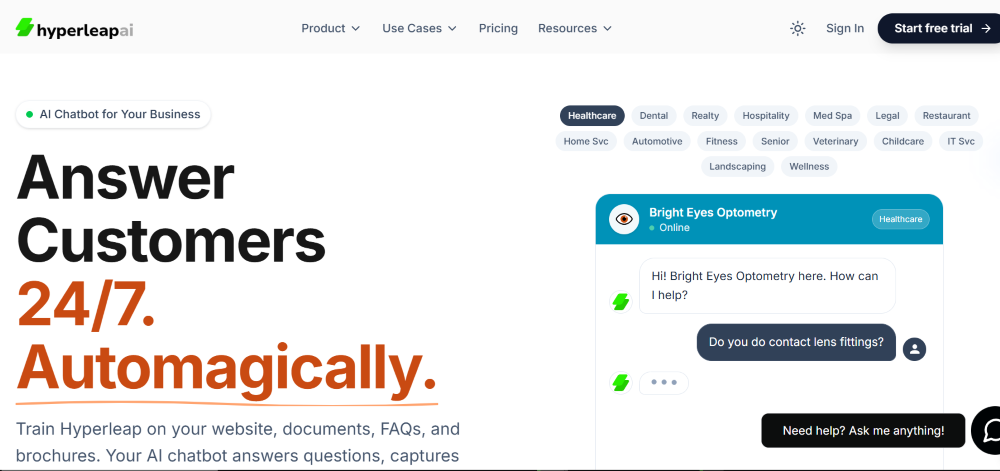
Hyperleap serves as a highly structured automation hub that strictly uses document grounding to prevent inaccurate answers. It connects seamlessly across WhatsApp, Instagram, and your site to handle complex requests securely. Rather than just offering conversational fluff, it reads directly from your established menus and operational policies to ensure guests get the same accurate answers they would from your best manager.
What makes it distinctive is its native WhatsApp architecture equipped with OTP (One-Time Password) verification. This allows for safe, verified lead capture for catering or large group bookings directly in the chat thread, making it a powerhouse for hospitality brands operating in regions where WhatsApp is the default mode of communication.
The honest limitation is that the platform is geared toward slightly larger setups or multi-location groups. The entry price point and setup complexity might feel steep for a single-location neighborhood cafe, as you need to meticulously format your menu data into clean files for the AI to read it effectively.
Pros & Cons
✓ Deep, document-grounded AI prevents wrong menu answers
✓ Native WhatsApp functionality with secure user verification
✓ Multi-language translation built-in for tourist-heavy areas
✗ Higher barrier to entry for smaller, independent venues
✗ Setup requires formatting your menus into clean data files
- Starter: $40/month (Up to 1,500 AI responses)
- Pro: $100/month (Up to 4,000 AI responses)
- Max: $200/month (Up to 20,000 AI responses)
Best for: Multi-location restaurant groups and venues with high WhatsApp message volume that need strict document-grounded answers.
2. Popmenu - Restaurant Marketing & Ordering Suite
Source: US Market Leader | AI Phone Answering | Integrated Online Ordering
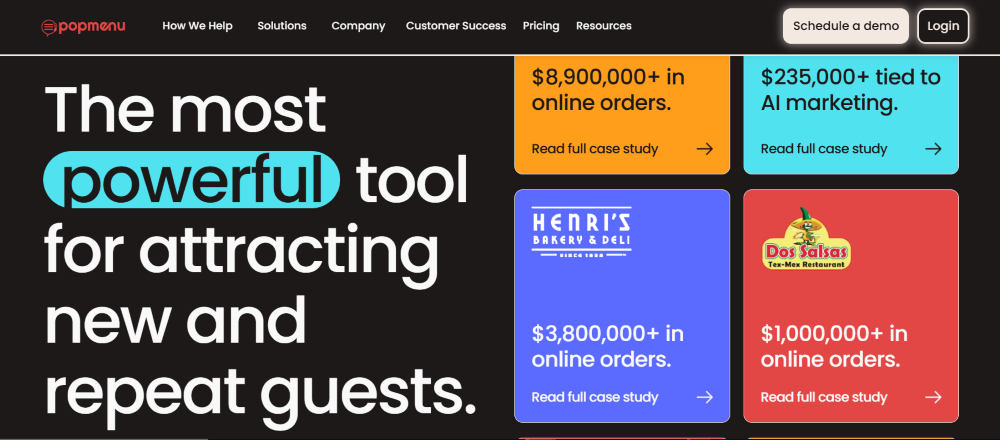
When evaluating full-stack AI tools for restaurants, Popmenu sits in a category of its own. It is designed to act as a comprehensive marketing and ordering suite rather than just a simple messaging plugin. While other platforms fixate entirely on text-based web chat, Popmenu tackles the loudest problem in the room: AI phone answering to intercept "Are you open?" and "Can I get a table?" calls during the frantic dinner rush.
The distinctive feature here is the connection between your interactive online menu and their automated marketing campaigns. When a guest "likes" a specific dish on your website or asks a question about it, the platform logs that preference, allowing you to trigger highly targeted, personalized SMS offers later on to drive repeat visits.
The massive caveat is the heavy price tag. This isn't a lightweight widget you install on a slow Tuesday; it's a foundational software investment that replaces several other tools in your tech stack, which can be massive overkill for a casual, counter-service cafe.
Pros & Cons
✓ Incredible AI phone answering system deflects low-value calls
✓ Built-in online ordering and SMS marketing natively synced
✓ Interactive digital menus that drive guest engagement
✗ Very expensive starting tier
✗ Primarily optimized for the US market and phone systems
- Starter: $179/month (Basic menu & website)
- Essentials: $299/month (Adds mass email and AI posts)
- Premier: $499/month (Full marketing suite & audience segmentation)
Best for: Established independent restaurants looking to consolidate their tech stack into an all-in-one ordering and marketing solution.
3. Heyy.io - Social Commerce AI Assistant
About: 15-Minute Setup | AI Employee Framework | Multi-platform Sync
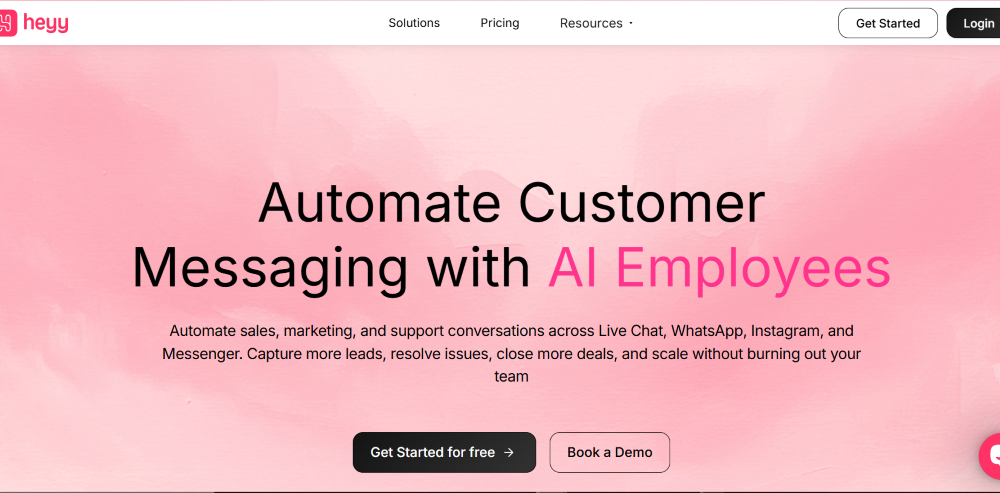
Heyy.io shines for venues that drive the majority of their foot traffic and inquiries through social media, cementing its place as one of the best chatbots for restaurants available. If you are constantly drowning in Instagram DMs, Heyy functions as a fast, flexible system that brings all your platforms into a single, automated inbox that actually understands your brand's unique voice and tone.
What sets it apart is the "AI Employee" framework tailored specifically for social commerce. It’s engineered to gracefully guide an Instagram user from casually asking "Is the patio dog-friendly?" straight into a confirmed table booking or online order without requiring human intervention. It effortlessly maintains context across different apps if the diner switches from IG to WhatsApp.
The honest limitation is that it is a newer, rapidly growing platform. While the conversational intelligence is top-tier and incredibly fast to deploy, it doesn't currently possess the decades of deep, legacy POS integrations that a massive dinosaur like OpenTable boasts.
Pros & Cons
✓ Omnichannel sync (WhatsApp, IG, Facebook, Website) in one dashboard
✓ Blazing fast 15-minute setup time directly from your website URLs
✓ Generous free plan available for testing the waters
✗ Fewer native integrations with legacy, on-premise POS systems
✗ Brand awareness is still growing compared to older tech
- Free: $0/month (Basic web widget, limited AI responses)
- Pro: $41/month (Full AI Employee training, social channels)
- Business: $89/month (High volume, advanced analytics)
Best for: Social-media-heavy restaurants, trendy cafes, and venues looking to drive direct social commerce and capture leads from Instagram.
4. OpenTable - Table Management CRM
Source: Market Leader - 50,000+ Venues | Deep CRM Sync | Diner Network
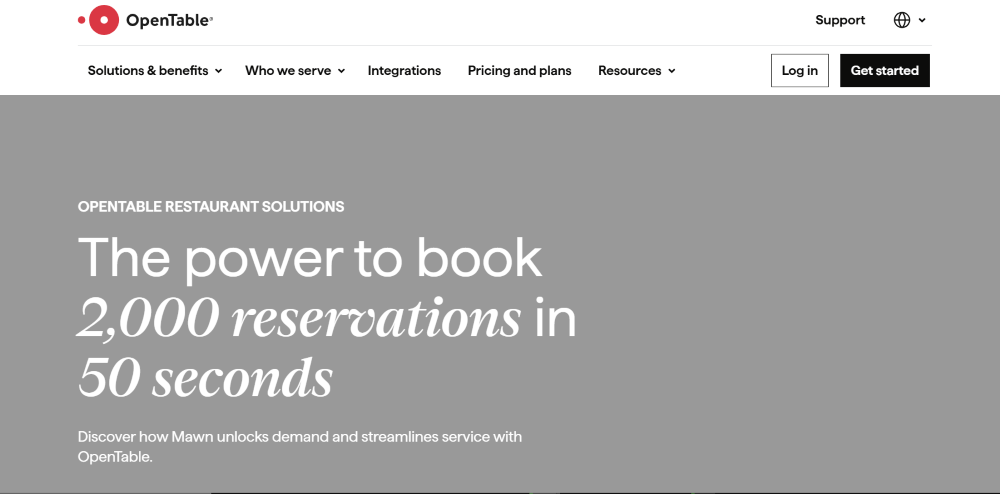
If your entire business model relies on turning over a tightly packed reservation book every night, OpenTable remains the heavyweight champion. Its chat and messaging functionalities are highly structured and rule-based, designed explicitly with one singular goal: converting a browser into a seated diner as frictionlessly as possible.
The standout feature is its unparalleled integration with its own world-class CRM. Because OpenTable owns the reservation data, the interface knows exactly who the diner is the moment they interact. It accesses their history to instantly recognize VIPs, track dietary preferences, and log special occasions, which empowers your real-life hosts to provide top-tier hospitality when the guest arrives.
The major drawback is the rigid pricing model and lack of conversational depth. You are paying a per-cover fee for every guest seated through their network, which can severely eat into your profit margins. Furthermore, the bot isn't designed to be conversational, it won't playfully explain your chef's culinary philosophy to a curious guest.
Pros & Cons
✓ Flawless, frictionless reservation flow directly into your book
✓ Massive built-in diner network drives organic traffic
✓ World-class guest CRM and table management
✗ Expensive per-cover commission structure
✗ Chatbot is highly rigid and lacks natural language capabilities
- Basic: $149/month + per-cover fees
- Core: $299/month + per-cover fees
- Pro: $499/month (Adds advanced relationship management)
Best for: Fine dining establishments and high-volume spots that live and die by their reservation book and need deep CRM capabilities.
5. Tidio (Lyro AI) - Website Conversational Support
Source: Verified 67% Resolution Rate | E-commerce Ready | Shopify Native
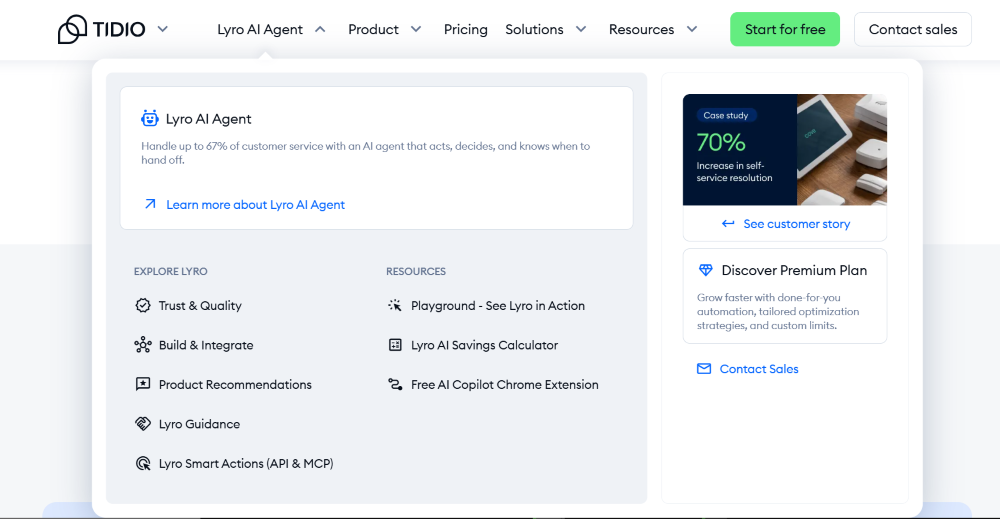
Tidio is widely considered the gold standard for pure website chat, utilizing its Lyro AI to act as a hyper-efficient FAQ engine. Think of it as a conversational search bar for your restaurant's website that instantly handles repetitive questions about parking, dress codes, and opening hours so your front-of-house staff can stay focused on the floor. If you want to see how it stacks up strictly as a site integration, read our post on The 10 Best Chat Widgets for Websites in 2026.
It is one of the most reliable AI tools for restaurants due to its verified 67% automated resolution rate. It excels at parsing your uploaded documents and website copy to instantly deliver correct answers with zero human oversight, and it plays incredibly nicely with e-commerce platforms if your restaurant sells branded merchandise or bottled sauces online.
The limitation lies in its channel focus. Tidio is primarily optimized for web browsers. While it technically connects to social channels, its core logic isn't natively built for the unique flow of restaurant reservations via WhatsApp or Instagram DMs, making it feel slightly clunky for social-first brands.
Pros & Cons
✓ Proven, high-deflection rate for website FAQs
✓ Extremely intuitive dashboard and setup process
✓ Great integration if you sell bottled sauces or merch on Shopify
✗ Social media and WhatsApp connections feel like afterthoughts
✗ Strict conversation limits on lower pricing tiers
- Starter: $29/month (Adds core automation)
- Growth: $49.17/month (Higher limits and analytics)
- Business: $749/month (For Maximum team efficiency)
Best for: Website-centric restaurants, breweries, or venues that also run robust online merchandise stores.
6. Chatfuel - Social Media Flow Builder
About: Official Meta Business Partner | Facebook & IG Automation | Visual Editor
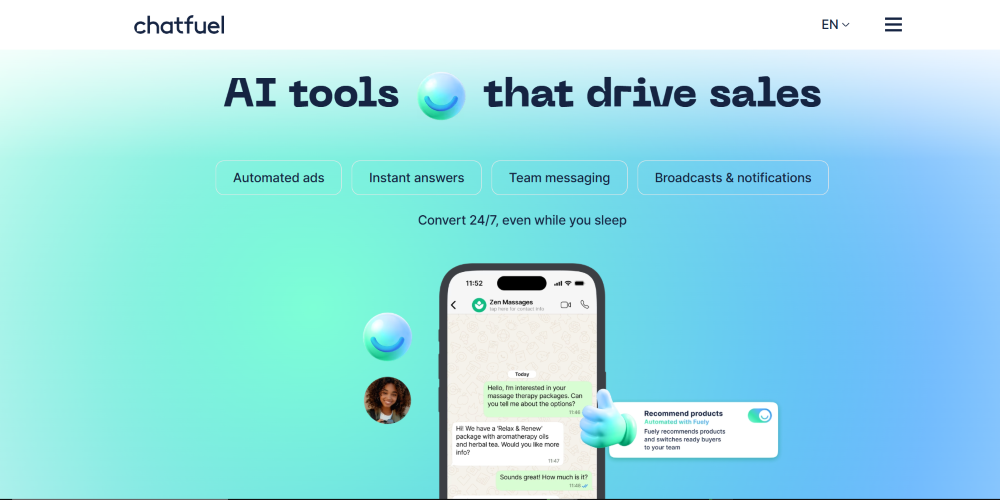
Chatfuel is the reliable veteran of Facebook and Instagram automation, utilizing a structured flow-builder rather than a complex generative learning model. This is actually a massive advantage if you demand absolute, pixel-perfect control over every single word your bot sends to a customer and don't want to risk any AI unpredictability.
The distinctive feature is the visual drag-and-drop builder that allows you to construct beautiful, interactive image galleries of your menu items right inside a Facebook Messenger thread. It creates a rich, app-like scrolling experience for the diner without them ever having to leave the social platform they are already using.
The downside is that it cannot "think" creatively. If a guest asks a complex, multi-part question that you haven't explicitly scripted a path for, the automation will simply break and require a human to take over, making it feel a bit rigid compared to true large language models.
Pros & Cons
✓ Perfect for highly structured, predictable social media giveaways
✓ Beautiful visual elements for showcasing food photography
✓ Pay-as-you-grow model suits scaling businesses
✗ Not a true large language model; lacks conversational nuance
✗ Multichannel use can get pricey due to Meta's WhatsApp fees
- AI Business Assistant: $69/month (Unlimited Contacts)
Best for: Small restaurants with simple social media needs looking to automate basic giveaways, FAQs, or highly visual menus on Meta platforms.
7. ChatBot (by Text.com) - Premium Visual Chat Assistant
About: Top Rated Visual Builder | AI Learning Tech | Omnichannel Widget
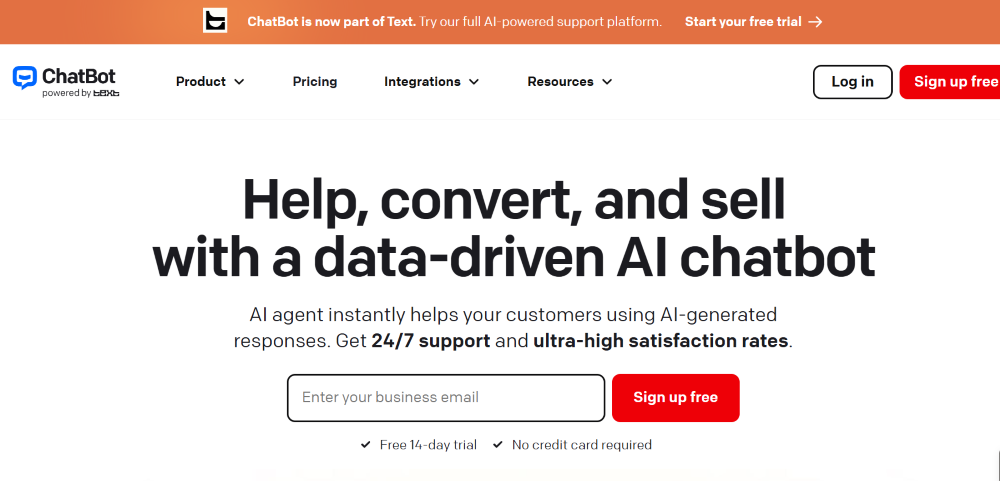
ChatBot caters specifically to premium hospitality brands that demand a polished, highly customized brand experience on their domain. Out of all the chatbots for restaurants on the market, it offers the sleekest, most professional visual presentation of digital menu cards and interactive chat widgets natively embedded on your site.
What makes it a top-tier custom AI solutions for business is its proprietary learning tech. The system actively scans your website copy and analyzes past customer chat logs to suggest better, more accurate answers over time. This means the system genuinely gets smarter and more aligned with your specific diners the longer you leave it running.
The downside is the high price-to-volume ratio. Starting at over fifty bucks a month for a relatively restricted number of automated chats, it’s positioned firmly as a premium enterprise tool. It also has a steeper learning curve to get those beautiful visual flows set up correctly compared to plug-and-play alternatives.
Pros & Cons
✓ Stunning, customizable web widget interface
✓ AI actually learns and adapts from past user interactions
✓ Top-tier analytics and reporting dashboards
✗ Expensive for venues with lower traffic
✗ Setup and optimization process requires a dedicated time investment
- Essential: Starts at $25/month
- Growth: Starts at $99/month
- Enterprise: Custom (Dedicated support and advanced SLAs)
Best for: High-end restaurants and premium hospitality groups that want a polished, custom-branded web chat experience and have the budget for premium tools.
Quick Guide: What to Choose Based on Your Needs
If you are still overwhelmed by the options, here is the cheat sheet to help you choose your perfect restaurant AI operating system:
- Choose Hyperleap if you have multiple locations and need strict, document-grounded answers delivered safely over WhatsApp.
- Choose Popmenu if you want to replace your entire tech stack and completely automate your phone lines.
- Choose Heyy.io if your primary traffic lives in Instagram DMs and you want a fast, affordable setup that acts like a real employee.
- Choose OpenTable if you are a fine dining spot heavily reliant on a reservation CRM and diner network.
- Choose Tidio if your main focus is capturing leads on your website and answering repetitive online FAQs.
- Choose Chatfuel if you want strict, visually beautiful, rule-based flows for Facebook and Instagram giveaways.
- Choose ChatBot if you are a premium brand that wants a highly customized, visually stunning widget that learns over time.
What to Consider Before Choosing
When evaluating custom AI solutions for business growth, feature lists can easily blur together, making every tool sound exactly the same. Keep your evaluation grounded by focusing deeply on these four non-negotiable criteria before signing a contract:
1. Resolution Rate vs. Customer Satisfaction (CSAT)
It is not enough for an automated bot to reply quickly; it actually has to resolve the diner's problem. Look for platforms that openly publish their resolution metrics. However, you must track your CSAT closely alongside it. If the AI is incredibly fast but sounds cold, robotic, or gives confusing directions to your parking lot, you will frustrate your diners and lose their business entirely.
2. Traffic Channel Alignment
Evaluate exactly where your actual diners are messaging you from. If you are an exclusive fine-dining spot that primarily gets emails and phone calls, an Instagram-focused bot is a waste of money. Conversely, if you run a trendy, fast-casual concept that receives 100 direct messages a day asking if you have oat milk, you need an omnichannel inbox that prioritizes social media over everything else.
3. Menu "Intelligence" and Grounding
Can the system handle nuanced dietary questions? "Is the salad dressing dairy-free?" is a make-or-break question for modern diners. Your setup must use "document grounding." This strictly limits the bot's knowledge base to only the specific menu links, PDFs, and FAQ documents you upload, preventing it from inventing creative but dangerously incorrect answers based on general internet data.
4. The Human Handoff
No automation is flawless, and hospitality is still a fundamentally human industry. Your chosen platform must have a seamless escalation protocol. If a guest is frustrated about a late delivery, the system should instantly alert a human manager. To understand the exact balance of when to automate and when to step in personally, read our detailed breakdown on the Chatbot vs Live Chat 2026 debate.
Ready to Modernize Your Front of House?
Managing the dinner rush is hard enough without having to play digital catch-up in your DMs. If you’re ready to see what a true AI Employee can do for your restaurant's social channels and website, Heyy.io can be trained on your specific menu and deployed in just 15 minutes. Stop losing sleep over unread messages and start turning late-night inquiries into confirmed bookings today. Check out pricing here.
FAQ: Chatbots for Restaurants
Can a chatbot take payments for orders?
Yes, several advanced platforms allow you to connect payment gateways like Stripe or PayPal directly into the chat flow. This means guests can order takeout and pay for it securely inside WhatsApp or Instagram DMs without ever navigating to a separate website.
How do I stop the AI from making things up about my menu?
You must use a system that relies on "document grounding." This restricts the AI so it only answers questions based on the exact menus and PDF files you upload. For a detailed walkthrough on setting this up correctly, check out our chatbots for small businesses setup guide.
Do I still need live chat if I have a bot?
Ideally, yes. Think of the bot as your diligent host and the live chat as your floor manager. The bot easily handles the 90% of routine questions (hours, location, basic menu queries), while a human smoothly steps in via live chat for the 10% of high-stakes issues or complex VIP requests.
How long does it take to set up?
It varies heavily by platform. A simple social media flow-builder can be mapped out in a few hours, while modern platforms utilizing pre-trained AI Employee frameworks can often read your website and be ready to deploy in under 15 minutes.
What happens if a customer messages when we are closed?
This is exactly when automation proves its ROI. The system seamlessly handles late-night booking requests, answers catering pricing questions, and collects the diner's contact details so you wake up to actionable leads instead of missed opportunities.
More blog posts to read
.png)


Ready to Automate Support
Across Every Channel?
.svg)
.avif)