.svg)
How an AI Customer Service Chatbot Saves Your Team 40+ Hours a Week

What percentage of your team's day is spent on work that genuinely needs them?
Not work that involves typing or work that involves copy-pasting a response they've sent 200 times this month. Work that actually requires judgment or knowledge that only THEY have.
For most support teams, only about 30 or 40% of their day is actually "high-value" work. The rest of it is just order status checks, password resets, and explaining the return policy over and over. That kind of volume kills productivity, creates a massive backlog, and honestly, just burns good people out until they quit, and you don't want that.
The thing is, that’s not a hiring problem, it’s a systems problem, and setting up a solid AI customer service chatbot is exactly how you fix it.
Why Support Teams Are Losing the Volume War
The math on this is actually pretty brutal when you look at it.
According to HubSpot's State of AI report, support reps using chatbots save about two hours and twenty minutes every single day. If you flip that around, it means teams without AI are basically burning those same hours on questions a bot could have handled in seconds.
Also, Freshworks' CX benchmark data shows that AI-enabled companies resolve tickets in 32 minutes on average, while teams without AI can take up to 36 hours. That's the difference between a brand people trust and one they complain about on Twitter.
At the end of the day, the question isn’t "how do we hire more?" It's "what should a human actually be doing?" If you want the full picture on where AI fits into that answer, using AI Customer Service is the place to start.
What an AI Customer Service Chatbot Actually Takes Off Your Plate
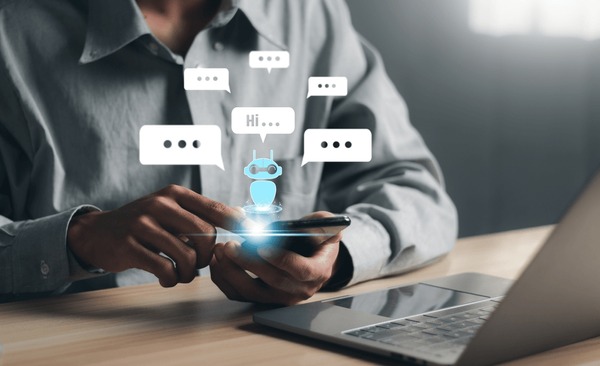
This part is where most businesses underestimate what's possible. They picture a bot that handles three FAQ questions and breaks on the fourth, but that's just not how it works anymore. A modern ai customer service chatbot is way more capable than those old-school versions we're all used to.
This here is what actually gets off your team's chest:
- Tier-1 repetitive questions. Shipping times, return policies, store hours, password resets, account information, subscription status, the bot handles these completely. No ticket created. No agent touched. IBM research confirms that AI chatbots can manage up to 80% of routine tasks and customer inquiries. That's the majority of what your team is currently doing manually.
- After-hours and weekend volume. Your team logs off. Your customers don't. A bot that stays live around the clock resolves what it can, escalates what it can't, and ensures nothing sits unacknowledged until Monday morning. 51% of consumers prefer interacting with bots over humans when seeking immediate assistance, so the experience actually lands well.
- Simultaneous scale. One agent handles 3–4 conversations at a time on a good day. A chatbot handles hundreds simultaneously, with the same quality on conversation 500 as on conversation 1. Support agents using AI handle 13.8% more inquiries per hour, and that's on top of what the bot is already resolving independently.
- Proactive issue detection. The best bots detect patterns, flag recurring complaints, and surface problems before they become a flood of tickets, giving your team intelligence to fix root causes instead of fighting symptoms.
What Automated Support Desk Looks Like
An automated support desk is a complete infrastructure that decides, intelligently, what gets automated, what gets escalated, and how the handoff between bot and an agent happens without friction. Done right, your automated support desk becomes the operational backbone of your entire support operation.
The best setups work across three distinct layers:
- Full deflection. The bot starts and finishes the conversation. No ticket created, no agent involved, customer satisfied. This is where the 40+ hours per week actually get recovered, by removing volume that never needed anyone from your team.
- Assisted handling. The bot pulls context, drafts a response, and hands it to an agent for review. The agent doesn't start from zero, they review, approve, and send. Ticket time drops dramatically even for issues that do need judgment.
- Intelligent escalation. The bot recognizes when it's out of its depth, a billing dispute, an angry customer, a sensitive situation, and escalates with full conversation context already loaded. No cold handoff. No "can you explain the issue again?"
The numbers really back this up too, at companies already using AI, 95% of decision-makers report reduced costs and time savings, and 92% say it improves customer service, according to Salesforce and Deloitte research. The ROI here isn't just a "maybe", that's what happens when you get the foundation right.
When you’re ready to actually flip the switch, there are a few specific things that can make or break your setup, these AI Chatbot best practices covers exactly what to do and what to avoid once you're ready to go live.
The CRM Layer: Why Integration Is Important
A chatbot that isn't connected to your CRM is basically working in the dark. It’s fine for generic questions, but it’s useless if a customer wants to know where their order is or needs a solution tailored to their specific account history.
When your customer service AI bots connect to your CRM, everything changes. The bot knows who the customer is before they type their second sentence. It sees their last three tickets, their purchase history, their loyalty tier. It resolves account-specific issues, not just FAQs, and if it does need to pass the conversation to a human, the agent isn't starting from scratch, they get a complete handoff note with everything relevant already loaded.
IBM Institute for Business Value research shows that by 2027, 71% of executives are aiming for fully touchless customer support inquiries. Meaning the bot handles the whole interaction from start to finish, but you honestly can't get there without that CRM layer. Without it, the second a customer asks something specific to their account, a human has to jump in.
The best part, though, is how this changes your data. Instead of those boring reports that just sit in a folder, every conversation the bot has feeds right back into your CRM. It helps you spot trends or figure out where people are getting frustrated, giving your team actual insights they can use to make things better.
You can find a full breakdown of how to connect these tools correctly in this walkthrough on CRM Chatbot best practices and what to realistically expect from it.
How to Scale Support with AI Without Making Costly Mistakes
Scale support with AI is the goal, but the teams that do it badly share a common failure mode: they automate too fast and forget to define escalation logic before going live.
Here's how to do it right:
- Start narrow and go deep. Pull your last 30 days of tickets and find the 20 most repeated question types. Train the bot to handle those 20 brilliantly before expanding. A bot trained well on 20 question types will deflect more volume than one trained poorly on 200, and the fastest way to scale support with AI without overcomplicating things is to start with depth.
- Define escalation triggers before launch. Decide upfront which words, topics, and signals mean an agent steps in, cancellation requests, billing disputes, anger language, privacy concerns. If the bot doesn't know its own limits, it will overstep them, and that costs more in recovery than the automation saved.
- Match the tone to your brand. A bot that sounds like a legal disclaimer when your team sounds like a friend is a trust problem. Train it on your phrasing, your personality, your voice. The best bots feel like an extension of your team.
- Review weekly for the first month. Workers are 33% more productive per hour when using generative AI, according to Federal Reserve Bank of St. Louis research, but that number belongs to well-tuned systems, not out-of-the-box deployments. The first 30 days are your biggest learning window. Use the data. Refine often.
For smaller teams, the challenge isn't just finding a bot, it's figuring out where to start without overcomplicating things. If you're looking for an entry point that matches your specific team size and ticket volume, this breakdown of top AI agents for 2026 can help you choose a tool that grows with you.
In Conclusion.
Your team's hours are finite, but your customers' questions are not.
Every week you run support without an ai customer service chatbot is a week your agents burn hours on questions that shouldn't reach them, while customers wait longer than they should for answers that should be instant.
Service professionals save over 2 hours daily using generative AI for quick responses. Across a five-person team, that's 50+ hours a week returned to work that actually matters: complex problems, high-value customers, and conversations that build loyalty instead of just resolving tickets. Brands building the right automated support desk right now are the ones their customers will still choose in the coming years.
See how Heyy.io helps your team work smarter with AI, start your free trial today.
Frequently Asked Questions
Q: How many hours per week can an AI customer service chatbot realistically save?
A: HubSpot's research shows reps save up to 2 hours and 20 minutes per day with AI assistance. Across a team of five, that's 50+ hours a week, before you count full deflections that never reach an agent at all. The higher your ratio of repetitive tier-1 tickets, the bigger the recovery.
Q: Will the chatbot understand natural language, or just match keywords?
A: Recent AI customer service chatbots use large language models to understand intent. A customer who types "where's my stuff??" gets the same accurate answer as someone who writes a formal inquiry. The bot reads what they mean, not just what they typed.
Q: What happens when the bot can't handle something?
A: A properly built bot escalates immediately, with the full conversation context already loaded for the agent. The agent picks up exactly where the bot left off, with everything they need already in front of them.
Q: How quickly do teams see results after going live?
A: Most teams see measurable deflection within the first week if the bot is trained properly. Full optimization, reliably handling the majority of tier-1 volume, typically takes 3–4 weeks of monitoring and refinement. The first month is where most of the learning happens.
Q: Do we need a developer to set up and maintain this?
A: Not with platforms like Heyy.io. You connect your knowledge base, configure your escalation rules, and go live without touching code. Ongoing updates are handled through a visual interface your team manages directly.
More blog posts to read

Ready to Automate Support
Across Every Channel?
.svg)
.avif)