.svg)
7 Security Benefits of Using ChatGPT Enterprise for Your Business

Your CFO just sent you an article about a company that leaked customer data through ChatGPT, so your legal team is panicking and wants to block it company-wide. Meanwhile, your sales team has been using it for weeks to write emails. And your IT department? They have no idea who's using what.
This is happening at companies everywhere right now and the conversation usually goes like this: "Should we allow ChatGPT or ban it completely?" But that's the wrong question.
The real question is: which version of ChatGPT are we talking about?
Because chatGPT enterprise is completely different from the free version your team downloaded on their phones last month. We’re not about discussing features or speed, but about what happens to your company's data when someone hits "send".
Here are seven ways the enterprise version protects your business that the free version simply doesn't.
1. OpenAI Doesn't Use Your Business Data to Train Their Models

This is the biggest difference.
When you use free ChatGPT, everything you type can be used to make OpenAI's models smarter, unless you dig into settings and turn it off manually. Your questions, the answers you get, files you upload, all of it. OpenAI says this clearly: they use consumer data to improve their AI.
With chatGPT enterprise, OpenAI does not use your business conversations to train their models. Not by default and not ever, unless you specifically tell them they can.
Think about what that means. If your team is using free ChatGPT to draft customer proposals, troubleshoot technical issues, or review contracts, all of that could technically end up training the next version of ChatGPT. Your proprietary information becomes part of their model's knowledge.
For businesses in healthcare, finance, or legal, this is very uncomfortable and illegal. You can't use tools that automatically feed client data back into a public AI model. The enterprise version fixes that problem. The free version doesn't.
Figuring out how AI fits into customer-facing work without creating legal problems can be tricky, but this AI Customer Service breakdown helps you understand what you need to know.
2. Your Data Is Encrypted
Enterprise-grade AI means your data is locked down when it's sitting in storage.
ChatGPT Enterprise uses the same level of encryption banks use, both when you're sending a message and when OpenAI is storing it on their servers. If someone tries to intercept your data or breaks into their storage, all they get is scrambled information.
If you're working with sensitive information; customer names, financial details, health records, a data breach can mean lawsuits, regulatory fines, and angry customers who lost trust in your company. Data privacy for business relies on these foundational protections being contractually guaranteed.
The encryption covers everything: the prompts you send, the responses you get back, and any files you upload. Even if someone intercepts it, they can't use it.
The free version also encrypts data, but you don't get the same legal guarantees or audit trails. For data privacy for business use cases, that difference matters.
3. It's Been Independently Audited
ChatGPT Enterprise has been checked by independent security experts to make sure their security actually works the way they claim it does.
This certification is called SOC 2 Type 2. What that means in normal language: outside auditors spent months testing OpenAI's security controls to make sure they work in practice, over time.
For a lot of businesses, especially if you sell to other businesses or work in regulated industries, having this certification isn't optional. Your customers require it before they'll even talk to you. Free ChatGPT doesn't have this but ChatGPT Enterprise does.
ChatGPT Enterprise also meets international security standards used across Europe, Asia, and other regions. So if your business operates globally or has clients who care about data protection, you've got the documentation to prove you're using a secure tool.
If your company needs to show customers, auditors, or partners that you're taking security seriously, these certifications exist for the enterprise version. They don't for the free version.
4. You Can Choose Where Your Data Is Physically Stored
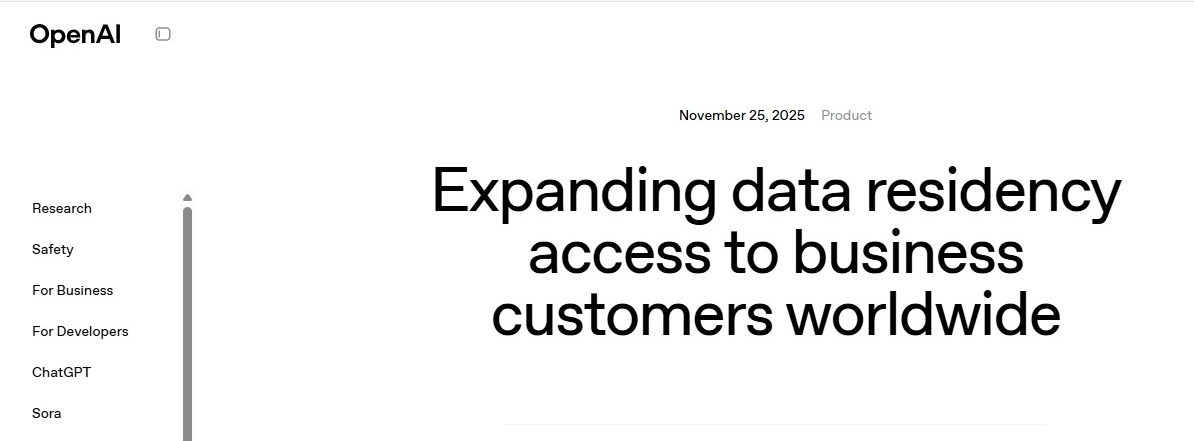
For companies operating in Europe, Canada, or other regions with strict data laws, where your data lives is very important.
ChatGPT Enterprise lets you choose which country your data is stored in, the U.S., Europe, UK, Japan, Canada, South Korea, Singapore, India, Australia, or the UAE. You pick the location, and OpenAI keeps your data there.
Why does this matter? In Europe, GDPR says you can't just ship customer data to other countries without permission. Canada has similar rules. If your business operates internationally and you're using a tool that stores data wherever it feels like it, you could be breaking the law without even realizing it.
This is especially important for companies subject to GDPR (Europe), PIPEDA (Canada), or other frameworks that restrict cross-border data transfers. Without data residency, you're potentially violating regulations just by using the tool, which is why data privacy for business deployments increasingly requires geo-specific storage controls.
With free ChatGPT, you don't get to choose. Your data goes wherever OpenAI's servers happen to be, and you have no control over it.
For businesses deploying custom AI deployments that touch customer or employee data across multiple jurisdictions, residency controls are legally required to operate.
5. You Can Actually Control Who Uses It and How

ChatGPT Enterprise gives you an admin dashboard where you can:
- Add or remove team members
- Force everyone to log in through your company's existing system (Single Sign-On)
- Make sure only people with company email addresses can access it
- See who's using the tool and how often
- Control how long OpenAI keeps your data
With the free ChatGPT, none of these exists, and every employee manages their own account. You can't see what they're doing, you can't enforce company login standards, and you definitely can't shut someone's access off if they leave the company or do something risky.
This creates what IT calls "shadow IT", employees using tools that nobody's monitoring. When something goes wrong: someone shares confidential data in a prompt, uploads a sensitive document, you find out after the damage is done.
With enterprise controls, you can enforce the same security standards you use everywhere else. Multi-factor authentication, Centralized login, Usage visibility. The things that keep your company secure.
6. You Can Delete Data
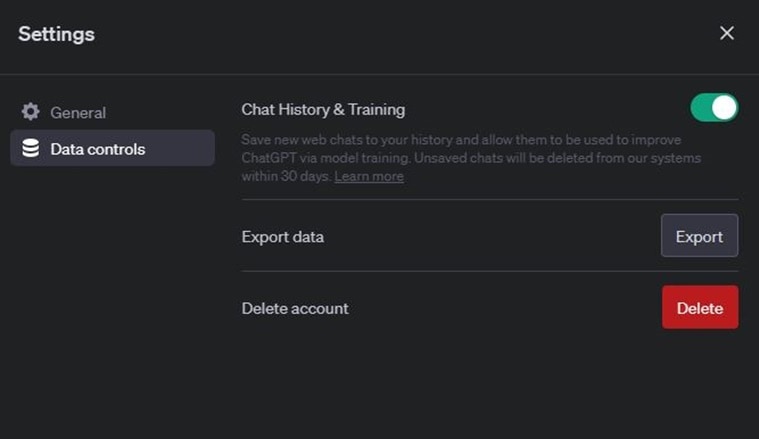
Some businesses can't keep data sitting around forever. Healthcare has HIPAA. Finance has regulations. Legal work has attorney-client privilege. In all these cases, holding onto old data for months creates risk.
ChatGPT Enterprise lets you set your own rules for how long data is kept, including an option to not store it at all. That means OpenAI processes your message, sends you a response, and immediately deletes everything. Nothing sitting in a database waiting to get hacked or subpoenaed.
This is very important if you work in healthcare, finance, or law where keeping data too long can get you in legal trouble.
OpenAI also offers something called a Data Processing Addendum (DPA), which is basically a legal contract that says you own your data, not them. Under GDPR and other privacy laws, this clarifies that OpenAI is just processing data on your behalf, they're not the owner of it.
Free ChatGPT doesn't let you control any of this. OpenAI keeps your data based on their standard policy, and there's no contract saying you own it.
If you handle protected health information, OpenAI can also sign a Business Associate Agreement (BAA) to meet HIPAA requirements, but only for enterprise customers.
7. There's a Security Team Watching for Problems 24/7
With ChatGPT Enterprise, you get visibility into how your team is using the tool, who's using it most, unusual patterns, potential red flags. Administrators can see if someone's uploading an abnormal number of files or making strange queries that might signal a security problem.
Behind the scenes, OpenAI runs a 24/7 security operation with automated alerts and a team investigating anything suspicious. They hire outside security firms to try to break into their systems (this is called penetration testing) to find weaknesses before bad actors do. They even pay hackers through a bug bounty program to report security issues.
If something goes wrong, enterprise customers get prioritized support and a team that's contractually responsible for helping you fix it. With free ChatGPT, you're on your own, maybe you post in a community forum and hope someone responds. For businesses running AI in production workflows, if there's a security incident, you need someone on the other side who's accountable.
What ChatGPT Enterprise Doesn't Solve
Upgrading to enterprise removes a lot of risk, but it doesn't make your employees incapable of making mistakes.
Even with all the protections above, someone can still copy-paste confidential client information into a prompt. They can still use it in ways that break your company's rules. They can still build custom GPTs that pull from data sources you haven't approved, which is why even custom AI deployments built on enterprise platforms still require governance.
Enterprise-grade AI gives you the tools for secure usage. It doesn't prevent people from doing dumb things.
You still need:
- Clear rules that explain what employees can and can't share in ChatGPT
- Training so people understand what counts as sensitive and why it matters
- Monitoring tools that catch when someone accidentally shares confidential data
- Regular check-ins to make sure people are using it safely
It helps to know if you need a general tool or something more specialized. This AI chatbot vs. ChatGPT guide breaks down which one makes the most sense for your setup.
Should Your Business Use ChatGPT Enterprise?
It depends on three things:
1. What kind of data your team works with.
If your people handle customer information, health records, financial data, legal documents, or anything else that's regulated, the enterprise version is the only version you should even consider. The free version isn't legally compliant for that kind of work.
2. How you're using AI.
If your team uses ChatGPT occasionally to brainstorm ideas or edit a draft email, the security risk is low. But if AI is embedded in how you serve customers, process orders, or run internal systems, the stakes are much higher. You need the enterprise protections.
3. How much risk your company can handle.
Some businesses are okay with a little risk if it means moving fast. Others; especially in finance, healthcare, legal, or government, can't afford any data leaks, even small ones.
It helps to first see how other teams are using AI to handle customer chats without it becoming a mess. You can see how those workflows actually look in this intro to customer messaging.
In Summary...
ChatGPT Enterprise is a completely different product with legal protections, security certifications, and admin controls that the free version simply doesn't have.
The seven protections we covered, OpenAI not training on your data, encryption, independent audits, data residency, admin controls, deletion options, and 24/7 monitoring, are what separate chatGPT enterprise from employees using random AI tools with zero oversight.
If your business is serious about using AI for work, these protections are the minimum for doing it without creating a legal or security mess. Also, if you’re a smaller business and aren't ready to drop a lot of money on big enterprise tools, we’ve also rounded up the best AI chatbots for small businesses to help you find a starting point that fits your budget.
See how Heyy.io gives you enterprise-grade AI built for customer messaging, start your free trial today.
Frequently Asked Questions
Q: Does ChatGPT Enterprise guarantee my data won't leak?
A: No tool can promise zero risk, ever. But ChatGPT Enterprise dramatically reduces the chances through encryption, access controls, and legal agreements that say OpenAI won't use your data to train their models.
Q: Can I use ChatGPT Enterprise if we handle patient medical records?
A: Yes, but only if you sign a special agreement called a Business Associate Agreement (BAA) with OpenAI. That's what makes it HIPAA-compliant. The standard enterprise version doesn't automatically cover healthcare data, you have to specifically request and set up the healthcare version.
Q: How much does it cost?
A: OpenAI doesn't list the price publicly, it depends on how big your company is and how much you'll use it. You need to talk to their sales team for a quote. For most mid-sized businesses, expect to pay significantly more than the $20/month consumer version, usually hundreds per employee per year at minimum.
Q: Is it better to use ChatGPT Enterprise or build our own custom AI?
A: Depends what you need. ChatGPT Enterprise is faster to set up and you don't need AI experts on staff. But it's a general-purpose tool. If you need something highly specialized or deeply integrated with your proprietary systems, custom AI deployments might be worth it. Most businesses start with Enterprise and only move to custom AI deployments when they hit limitations that off-the-shelf can't solve.
Q: Can I control which employees get access?
A: Yes. The admin dashboard lets you decide who gets access, what they can do, require company login, and shut off access anytime. This is one of the biggest differences from free ChatGPT, where everyone just makes their own account and you have no visibility or control.
More blog posts to read

Ready to Automate Support
Across Every Channel?
.svg)
.avif)