.svg)
Top 10 Sentiment Analysis Tools In 2026 (And How to Use Them)

So, your product launch went well. Or at least, that is what you thought. Three days later, a thread on Reddit complaining about a shipping issue suddenly has 400 upvotes. An influencer you have never even heard of just posted about a bad customer service experience to their 80,000 followers. To top it off, three negative Google reviews are quietly dragging your average down from a 4.6 to a 4.3.
The crazy part? None of this showed up in your support ticket volume. No one escalated it internally, and by the time someone on your team finally spotted it, the narrative had already formed out in the wild.
This is a massive deal because 94% of consumers say a negative online review has convinced them to avoid a business, according to consumer survey data from ReviewTrackers. Sentiment analysis tools are exactly what prevent scenarios like this by detecting those subtle shifts in public perception before they have a chance to compound into a full-blown crisis.
This guide covers the 10 best sentiment analysis tools in 2026, what each one actually does well, the real truth about their pricing, and exactly how each category of tool helps you stay on top of your brand reputation management.
What Is Sentiment Analysis?
Sentiment analysis is the use of AI and natural language processing to identify whether a piece of text expresses a positive, negative, or neutral attitude. In practice, modern tools go well beyond the three-category classification. They detect emotion (frustration, enthusiasm, disappointment), intent (purchase intent, churn intent, complaint intent), urgency, and specific topics within a single piece of content.
Applied to brand management, sentiment analysis processes thousands of mentions, reviews, support messages, and social posts simultaneously, surfaces patterns a human team could never detect at that scale, and flags the signals that require immediate action.
The distinction between AI sentiment analysis tools in 2026 and their predecessors is the combination of accuracy, language coverage, and data source breadth. Leading platforms now analyze sentiment across social media, review sites, news, forums, customer support conversations, video transcripts, and podcast content simultaneously. Some now track brand mentions inside AI-generated responses from ChatGPT, Claude, and Gemini, which is a new frontier of brand monitoring that did not exist two years ago.
Why Brand Sentiment Analysis Matters More in 2026
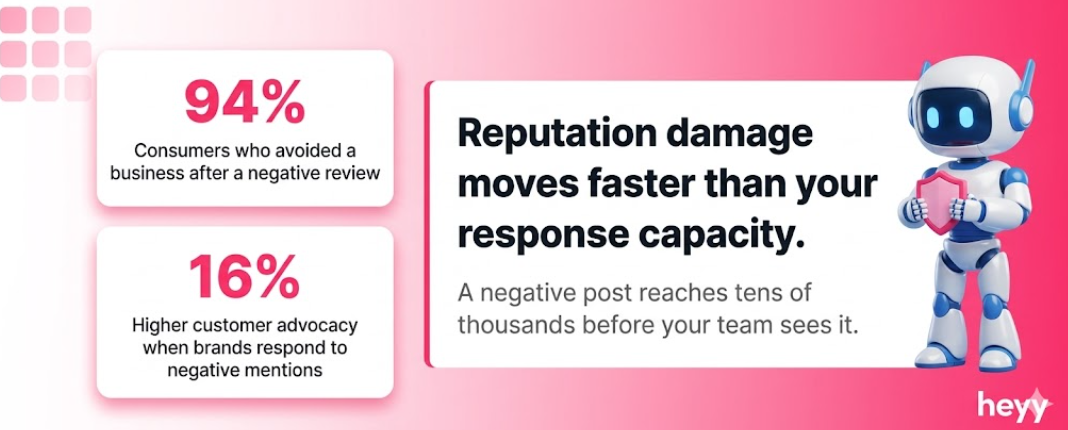
Reputation damage moves faster than your response capacity. A negative post on X or Instagram can reach tens of thousands of people within hours. A brand without real-time sentiment monitoring discovers the damage at the same time their customers do, too late to shape the narrative.
Customer feedback is scattered across more channels than any team can manually monitor. Reviews on Google, TripAdvisor, and App Store. Comments on Instagram, TikTok, and YouTube. Reddit threads. Forum discussions. WhatsApp groups. No team of humans can monitor all of these simultaneously. AI sentiment analysis tools can.
How does sentiment analysis help with brand reputation management specifically? It gives you early warning before a problem becomes a crisis, a pattern view before an individual complaint becomes a trend, and the competitive intelligence to know how your brand sentiment compares to your competitors in the same conversations. The businesses running sentiment analysis proactively are not just protecting their reputation. They are using sentiment data to improve products, train support teams, and identify the specific experiences that drive advocacy.
Brands that respond to negative reviews and social feedback see 16% higher customer advocacy rates than those that do not, according to ReviewTrackers' data. Sentiment tools make that response speed operationally possible.
Quick Comparison: 10 Best Sentiment Analysis Tools in 2026
The 10 Best Sentiment Analysis Tools in 2026
1. Brandwatch — Best for Enterprise Consumer Intelligence
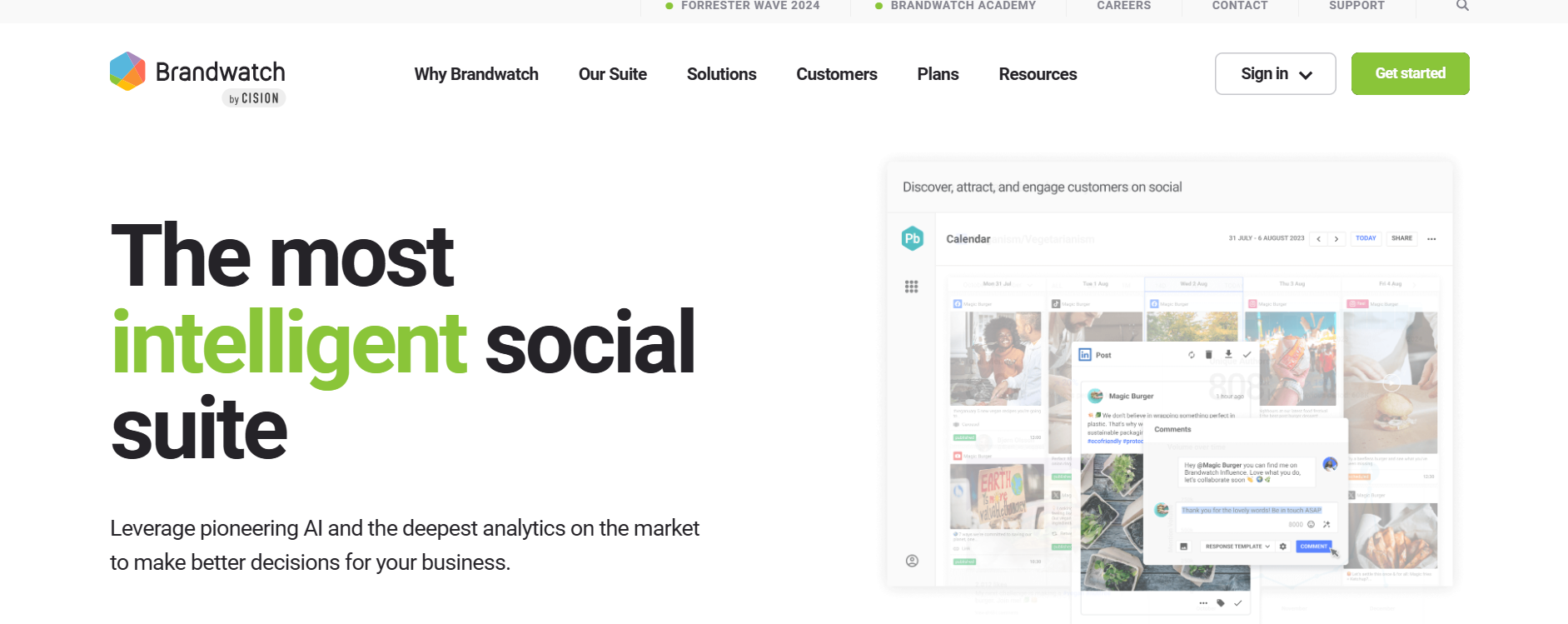
Brandwatch is the benchmark for enterprise-grade AI sentiment analysis tools. It processes data from over 100 million online sources: social media, news sites, blogs, forums, review platforms, and video content. The AI classifies sentiment, detects emotion categories beyond positive/negative/neutral, identifies the specific topics driving each sentiment signal, and surfaces the trends before they reach the mainstream.
The competitive intelligence capabilities set it apart from other enterprise tools. Brandwatch shows you how your brand sentiment compares to named competitors in the same conversation threads, which allows brand managers to identify sentiment gaps and advantages that would otherwise require manual research.
For enterprise teams managing complex brand portfolios across multiple markets, Brandwatch is the industry standard. The trade-off is cost and complexity. It is not a tool for small teams or businesses that need to go live quickly.
Best for: Enterprise brands, PR agencies, and research teams needing deep consumer intelligence across many markets and sources.
Pricing: Custom. Requires a demo. Positioned for enterprise budgets.
What it does distinctively: Topic modeling within sentiment data, competitive share of voice measurement, and the depth of historical data access for trend analysis.
2. Talkwalker — Best for Multilingual and Visual Sentiment Analysis
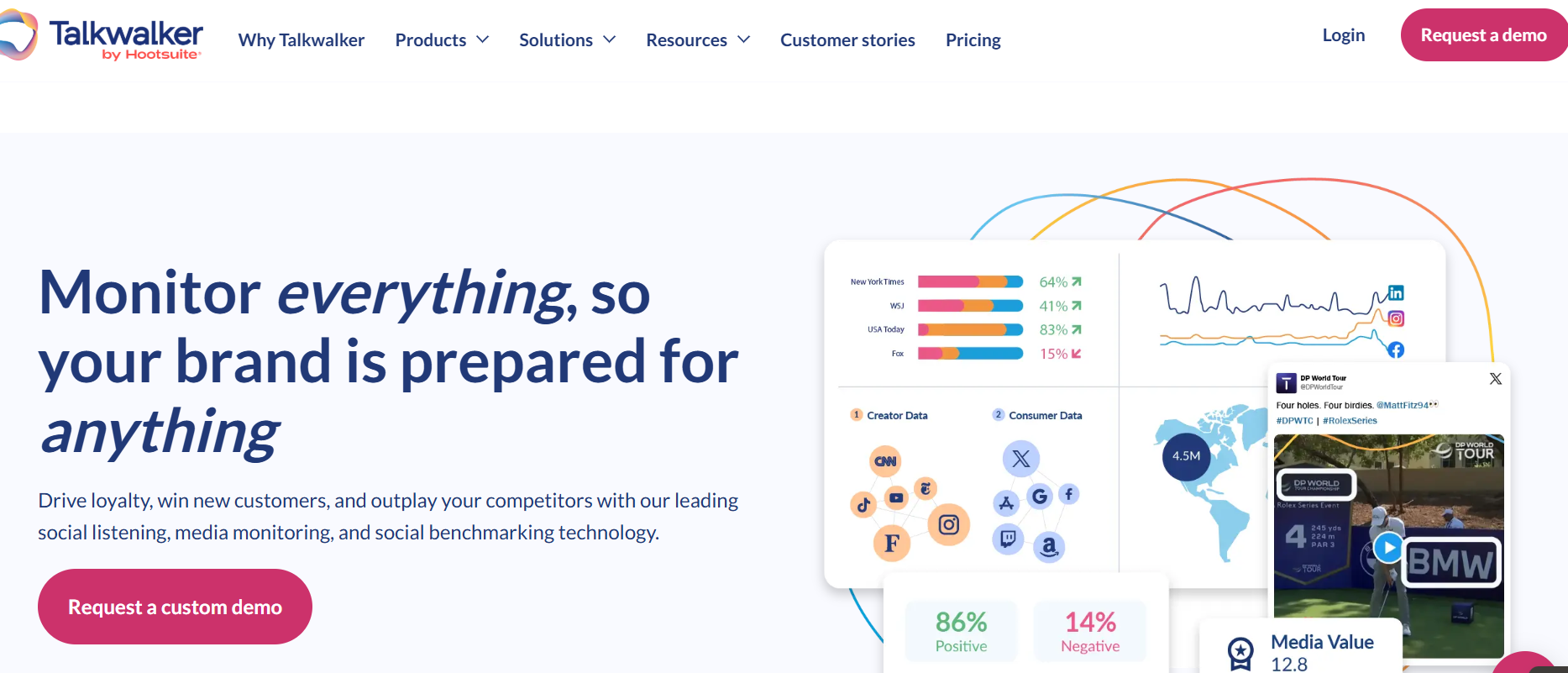
Talkwalker offers AI sentiment analysis in 187 languages, which makes it the leading choice for global brands managing reputation across multiple linguistic markets simultaneously. Its visual intelligence layer analyzes logos, scenes, and emotional cues in images and video, not just text, which covers the sentiment expressed in visual content that text-only tools miss entirely.
Podcast and video transcript sentiment analysis is another differentiator. A brand mentioned negatively in a widely-distributed podcast reaches a different audience than a tweet. Talkwalker catches both. Best tools for brand sentiment analysis rankings consistently place Talkwalker at the top for global and multilingual deployments, per The Rank Masters' 2026 brand monitoring analysis.
The integration with Hootsuite's platform means teams that already use Hootsuite for social media management can add Talkwalker's sentiment layer without switching platforms.
Best for: Global brands managing reputation across multiple languages, and any brand where visual content (images, video, podcasts) is a significant conversation medium.
Pricing: Free and Custom Demo are available.
What it does distinctively: Visual sentiment analysis, 187-language coverage, and podcast/video transcript monitoring.
3. Brand24 — Best for Mid-Market Real-Time Brand Monitoring
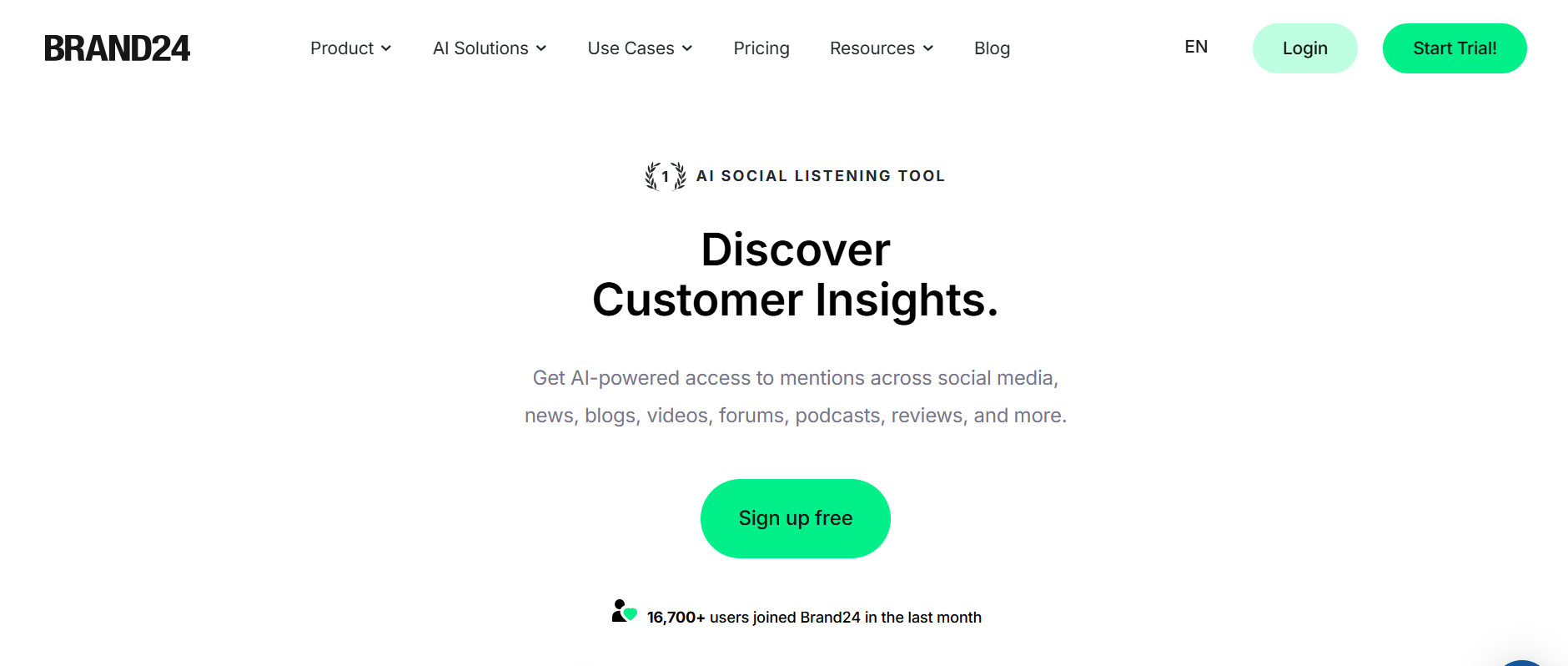
Brand24 is the most accessible AI-powered brand sentiment tool that meaningfully covers the gap between basic mention trackers and enterprise platforms. It monitors social media, news, blogs, forums, podcasts, and review sites simultaneously, classifies sentiment with AI, and surfaces anomaly alerts when mention volume or sentiment scores shift unusually.
The 2026 version includes LLM monitoring as an add-on: it tracks whether and how your brand is being discussed inside AI-generated responses from ChatGPT, Claude, Gemini, Perplexity, and Grok. This is a genuinely new capability that did not exist in previous sentiment tools and reflects how brand perception now forms in AI-generated content as well as traditional social channels.
For mid-market marketing teams, agencies, and founders who need real-time brand intelligence without hiring a dedicated analyst, Brand24 hits the right capability-to-cost balance. Brand24 customers report detecting and responding to reputation issues 47% faster after deployment, per Brand24's published customer outcome data.
Best for: Mid-market brands, marketing agencies, and growing businesses needing real-time social listening and sentiment without enterprise pricing or complexity.
Pricing: Individual plan from $249/month (3 keywords, 2,000 mentions/month). Team plan $349/month. Pro plan $499/month with real-time updates.
What it does distinctively: LLM monitoring (tracks brand mentions inside AI responses), AI anomaly detection for crisis early warning, and sarcasm/slang detection with updated 2026 NLP models.
4. Sprout Social — Best for Teams That Manage Social Media and Sentiment Together
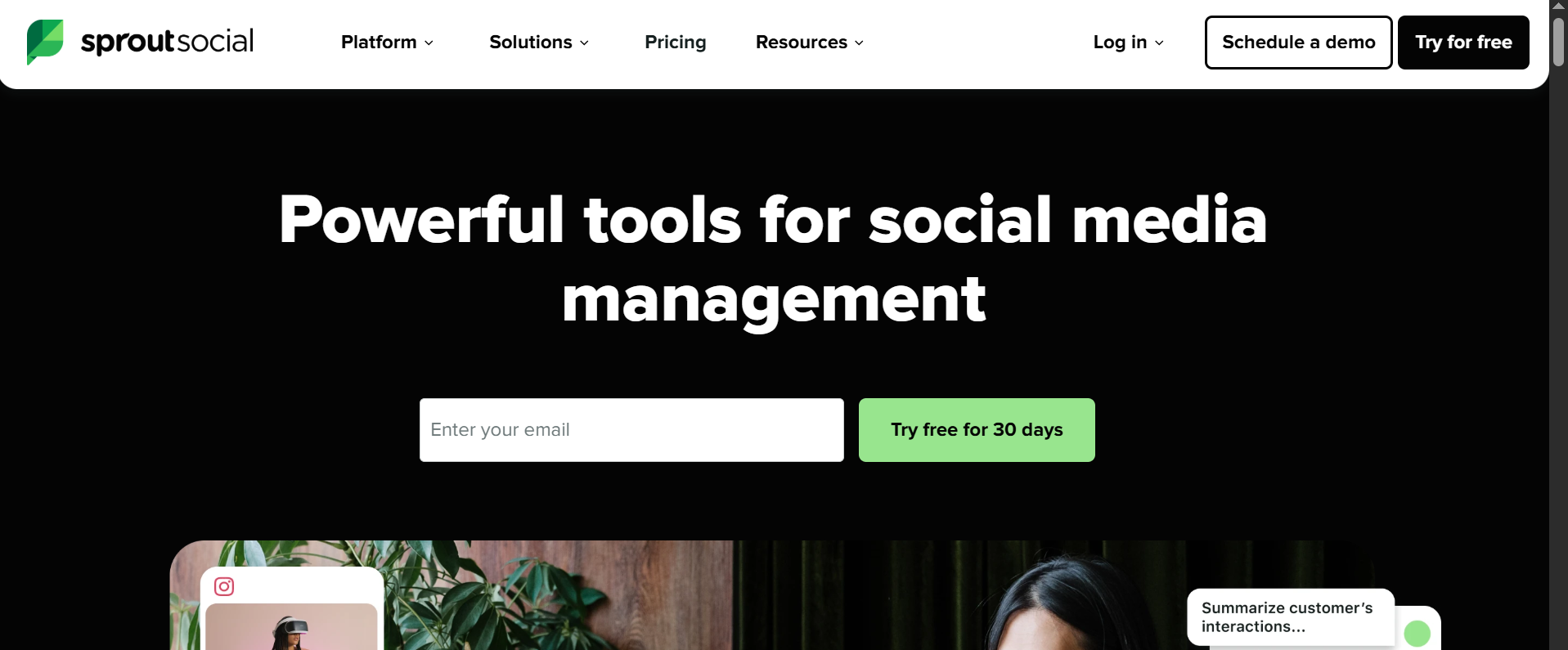
Sprout Social combines social media management (publishing, scheduling, inbox management) with AI-powered sentiment analysis in one platform. For teams where the same people manage content, community, and brand monitoring, this eliminates the tool-switching overhead that degrades both functions when separated.
The Smart Inbox consolidates every mention, comment, and DM from Facebook, Instagram, X, LinkedIn, and YouTube into one prioritized queue. AI sentiment classification flags negative interactions for immediate attention before a human reviewer has to assess the tone manually. Sentiment trend reports show how brand perception is moving over time, segmented by platform and campaign.
Sprout Social's AI-assisted sentiment monitoring helps teams manage 3x more brand conversations without adding headcount, according to their published performance data. For content and community teams, the integrated model is more efficient than connecting a separate sentiment tool to a social management platform.
Best for: Marketing and community teams where social media management and brand sentiment monitoring are handled by the same people.
Pricing: Starts at $199/month for 5 solid profiles. Scales with additional seats.
What it does distinctively: Publishing, engagement, and sentiment monitoring in one platform, with the most complete social channel native coverage of any tool on this list.
5. Mention — Best for Brands Wanting Social and Review Site Coverage Together
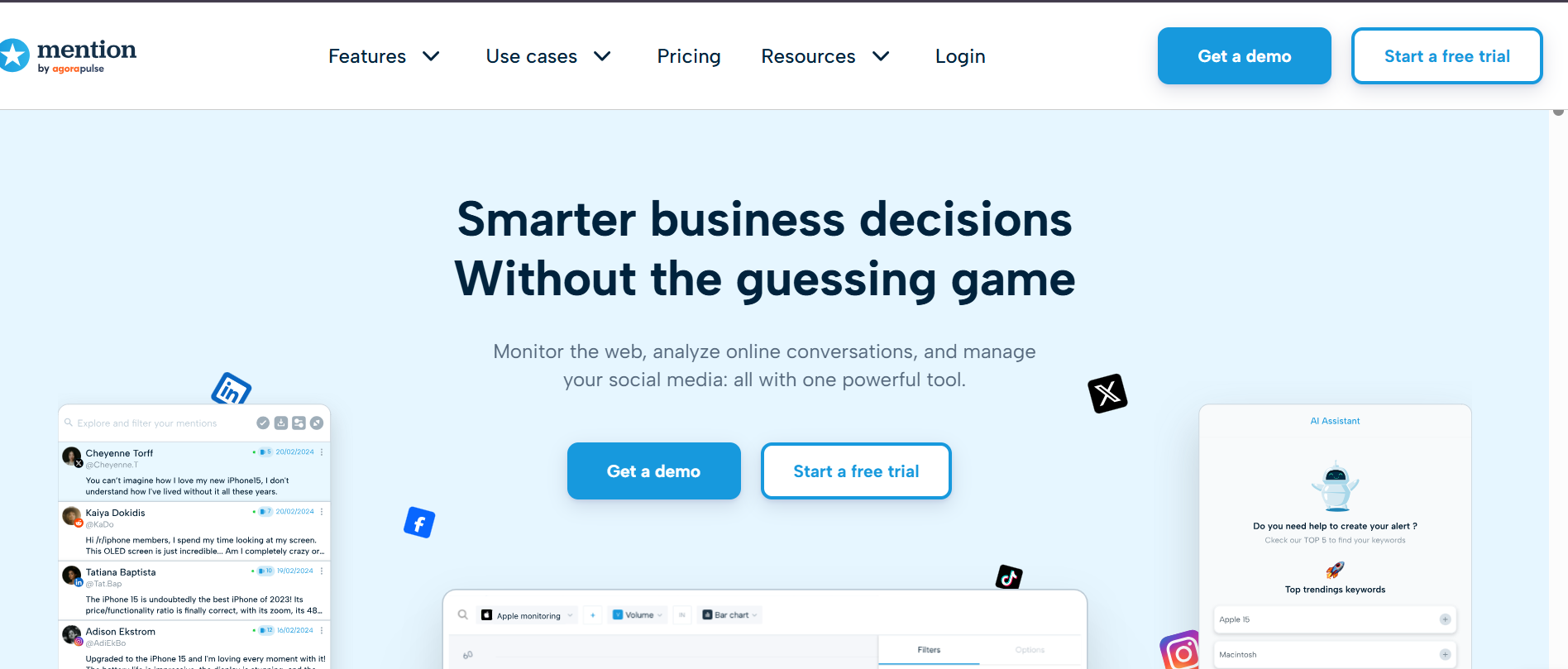
Mention monitors web and social channels alongside 75+ review sites simultaneously, which means a single platform covers both the social conversation and the review ecosystem that most social listening tools handle separately. Review sites included go beyond Google and TripAdvisor to cover industry-specific platforms, which matters for businesses in hospitality, healthcare, legal services, and other verticals with specialized review ecosystems.
Real-time alerts notify teams when new mentions appear, which allows immediate responses to negative content before it accumulates. For marketing teams that need both competitive monitoring (share of voice, competitor sentiment) and review-site tracking without enterprise pricing, Mention provides a cost-effective unified approach.
Best for: Small to mid-sized businesses and agencies that need social listening plus review site monitoring in one affordable platform.
Pricing: Plans from $599, with Social Media & Review Monitoring.
What it does distinctively: Coverage of 75+ review sites alongside social and web monitoring in a single feed, at accessible mid-market pricing.
6. Qualtrics XM — Best for Customer Experience and Interaction Sentiment
Qualtrics XM takes a different approach from social listening tools. Instead of monitoring public brand conversations, it analyzes sentiment from structured data sources: customer surveys, support ticket text, chat transcripts, and website feedback forms. The result is sentiment data anchored to specific customer interactions rather than public mentions.
The AI identifies themes within open-ended survey responses, classifies the sentiment of support ticket text, and connects sentiment signals to operational metrics like CSAT and NPS in the same platform. For businesses where understanding why satisfaction scores change matters as much as knowing that they changed, Qualtrics' ability to decode the text behind the scores is the distinguishing capability.
Qualtrics customers report 15 to 20% improvements in customer retention after implementing AI-driven text sentiment analysis on support interactions, per their published case study data. The improvement comes from identifying the specific language patterns and topic categories that precede churn and addressing them proactively.
Best for: CX and research teams that need sentiment analysis connected to survey, support, and feedback data rather than public social monitoring.
Pricing: Custom. Enterprise pricing based on survey volume and features.
What it does distinctively: Connects sentiment signals directly to operational CX metrics, and analyzes open-ended survey and support ticket text at scale.
7. Awario — Best for Budget-Conscious Teams Needing Social Listening Basics
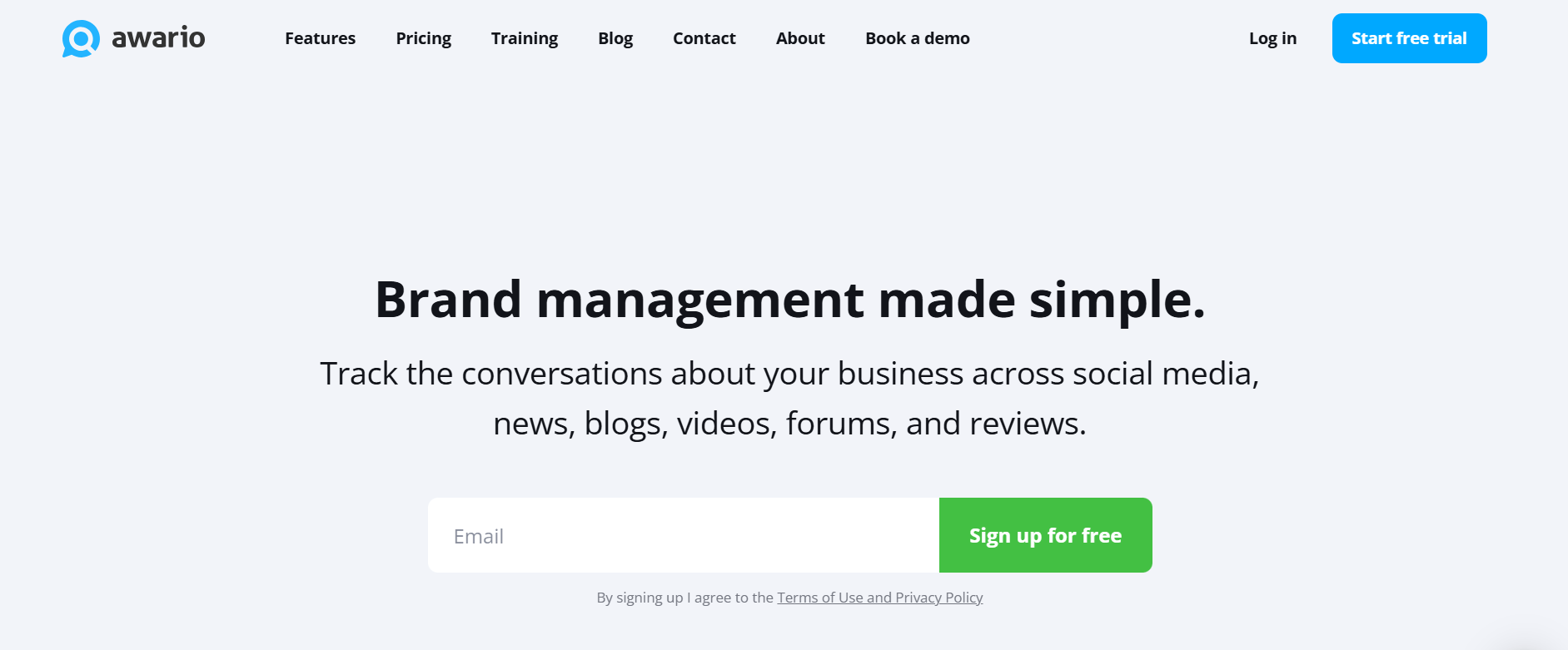
Awario is the most affordable tool on this list that provides genuine real-time social listening with sentiment analysis. It monitors social media, news sites, blogs, and forums, classifies mentions as positive, negative, or neutral, and provides Boolean search capability for precise topic tracking.
For small businesses, individual brand owners, or agencies managing clients with limited sentiment monitoring budgets, Awario delivers the core functionality of real-time alerts, sentiment classification, and competitive mention tracking at a price point that the enterprise tools cannot match.
The trade-off is depth. Awario does not offer visual sentiment analysis, multilingual NLP at Talkwalker's scale, or the AI anomaly detection that Brand24 provides. For straightforward brand mention tracking with sentiment classification, it is the most accessible entry point on this list.
Best for: Small businesses, individual brand owners, and agencies needing affordable real-time social listening with sentiment classification.
Pricing: Starts at $49/month for 3 topics. Pro plan at $149/month. Enterprise at $399/month.
What it does distinctively: The lowest entry price for genuine real-time social listening with sentiment analysis among the tools reviewed here.
8. YouScan — Best for Brands Where Visual Content Drives Reputation
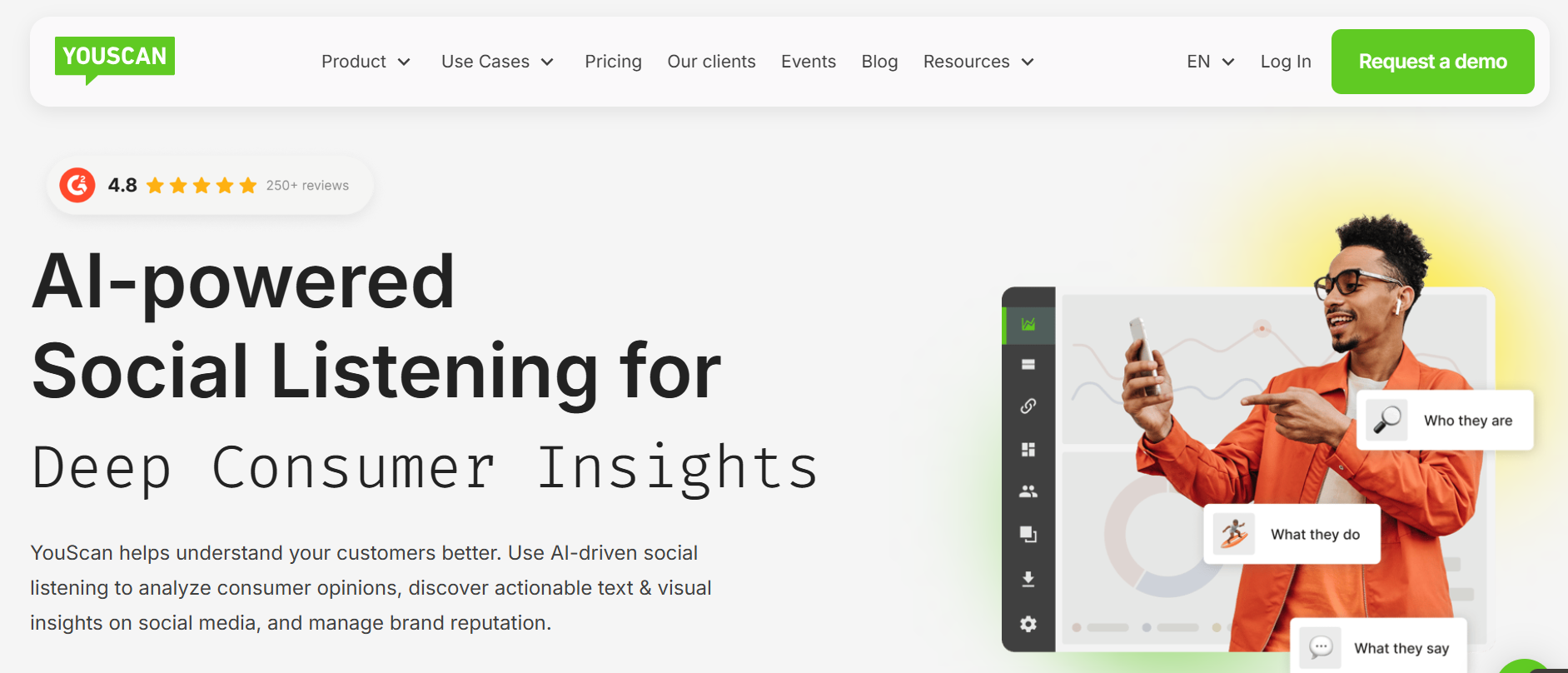
YouScan leads in image-based sentiment analysis. It detects brand logos in images, interprets the context and emotional tone of scenes where the brand appears, and analyzes visual sentiment in user-generated content on Instagram, TikTok, and Pinterest where image-first communication dominates.
For consumer brands, fashion companies, restaurants, travel businesses, and any brand whose reputation is significantly shaped by how it appears in photos rather than how it is described in text, YouScan's visual intelligence covers the sentiment layer that text-only tools miss. A brand that appears in beach vacation photos with enthusiastic captions reads differently from the same brand appearing in complaint screenshots.
Best for: Consumer brands, FMCG companies, hospitality businesses, and any brand where Instagram and TikTok drive significant reputation formation through visual content.
Pricing: Plans from $499/month, billed annually. Enterprise plans available.
What it does distinctively: The deepest image and visual content sentiment analysis of any tool on this list, with logo detection and scene context interpretation.
9. Lexalytics — Best for Enterprises Embedding Sentiment Into Their Own Products
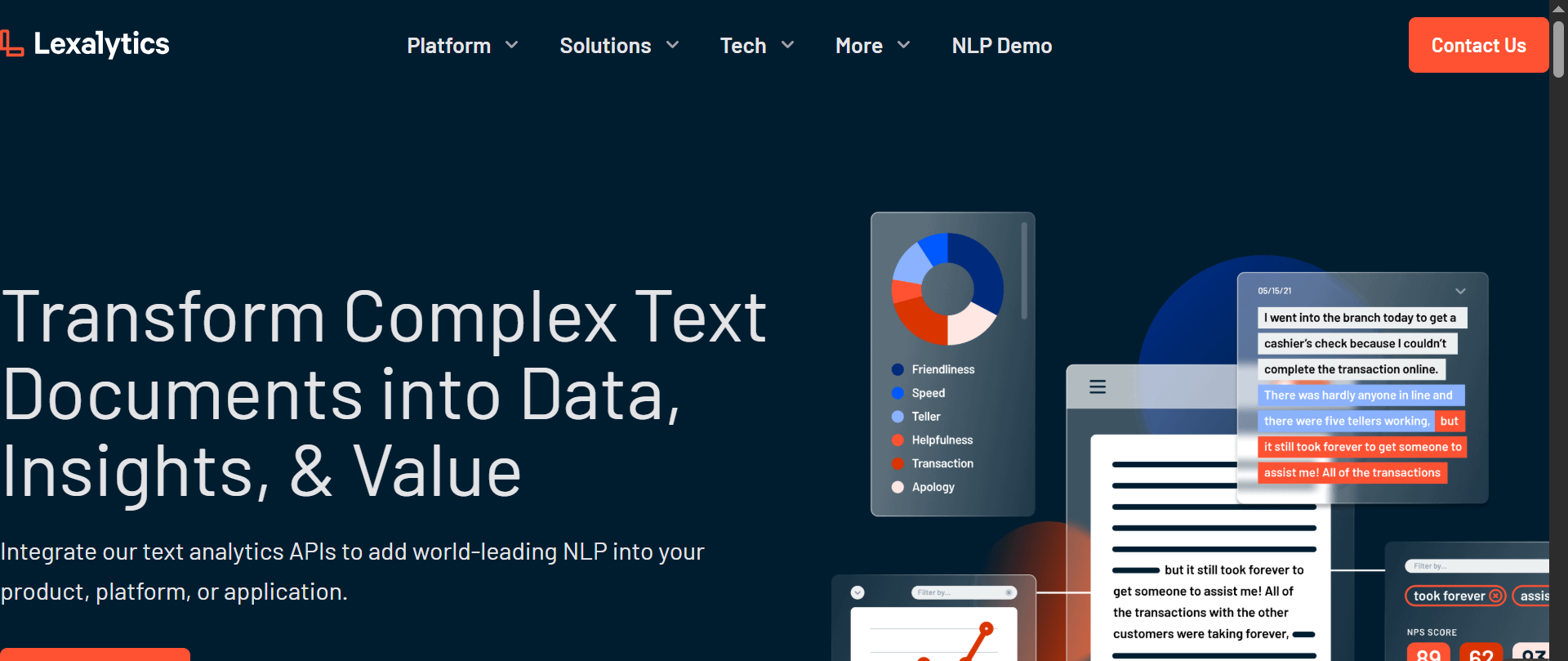
Lexalytics (now the Intelus AI platform) is an NLP engine rather than a monitoring dashboard. It provides sentiment analysis, entity recognition, intent detection, and text categorization via API for enterprises that want to embed these capabilities directly into their own platforms, products, or data pipelines.
If you need to add sentiment analysis to your customer support platform, analyze support ticket text programmatically, or build internal tools that classify customer feedback at scale, Lexalytics provides the NLP infrastructure without requiring you to send data to a third-party monitoring dashboard.
Best for: Enterprise development teams and data science organizations that need to embed NLP sentiment capabilities in proprietary systems.
Pricing: Custom. API-based enterprise pricing.
What it does distinctively: Enterprise NLP as an API rather than a dashboard, for teams building sentiment intelligence into their own products rather than using a pre-built monitoring interface.
10. MonkeyLearn — Best for Custom Text Classification Without Deep Engineering
MonkeyLearn(Medallia) provides no-code and low-code tools for building custom text classifiers and sentiment analysis models. Where most tools apply pre-built sentiment models trained on general data, MonkeyLearn allows teams to train models on their specific data and domain language.
For businesses in specialized industries where standard sentiment models produce poor accuracy (healthcare, legal, financial services, specialized B2B), the ability to build a custom model on your own labeled data significantly improves classification quality. The platform has a visual workflow builder that allows non-technical teams to build and deploy custom models without machine learning expertise.
Best for: Teams in specialized industries where generic sentiment models produce low accuracy, and product teams that need custom text classification capabilities without ML engineering resources.
Pricing: Plans from $299/month. Custom enterprise plans available.
What it does distinctively: Custom ML model training for domain-specific sentiment classification, accessible to non-technical teams through a visual builder.
How Does Sentiment Analysis Help With Brand Reputation Management?
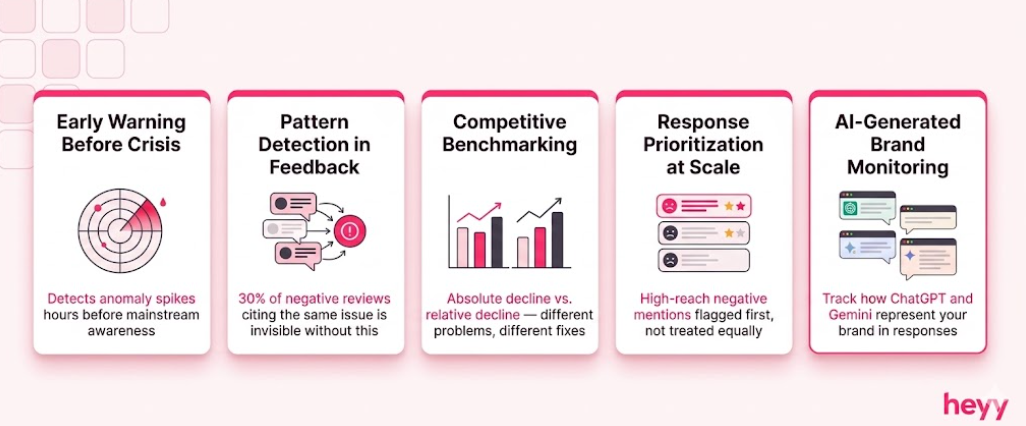
This question deserves a direct answer because most sentiment analysis content describes features without explaining the specific reputation use cases.
Early warning before a crisis forms: How does sentiment analysis help with brand reputation management at the most critical moment? By detecting anomaly spikes in negative sentiment before they reach mainstream awareness. A sudden 40% increase in negative mentions about a specific product feature is a signal. It arrives in your Brand24 or Brandwatch alert hours before it becomes a Twitter moment or a news story. That window is where proactive reputation defense happens.
Pattern detection in customer feedback: Sentiment analysis identifies that 30% of your negative reviews mention the same specific pain point, which is invisible in aggregate satisfaction scores. That pattern is a product improvement signal, a training priority for your support team, and a potential crisis prevention target depending on its severity.
Competitive sentiment benchmarking: How does sentiment analysis help with brand reputation management relative to your competition? It shows you whether your brand sentiment is declining in absolute terms or just in relation to a competitor who is improving faster. These are different problems with different solutions.
Response prioritization at scale: Not every negative mention requires the same response urgency. Sentiment tools classify by negativity intensity, reach, and influence level so your team invests response effort in the highest-risk conversations rather than treating every negative mention equally.
AI-generated brand monitoring: The 2026 frontier: how does sentiment analysis help with brand reputation management in AI-generated content? Tools like Brand24 now track whether ChatGPT, Claude, or Gemini are recommending or warning against your brand in their responses. If an AI assistant is consistently presenting your competitor favorably or describing your business negatively, that shapes brand perception at scale without appearing in social media or review data.
How to Choose the Right Sentiment Analysis Tool
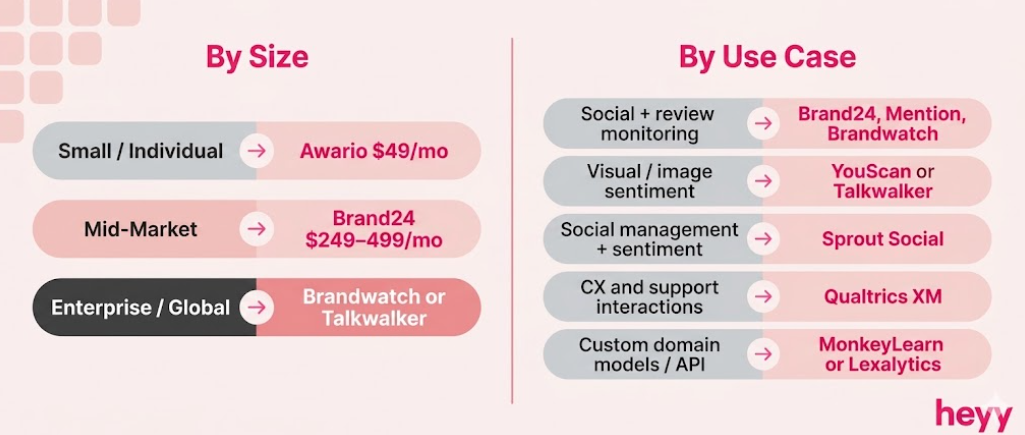
By Business Size and Budget
Small businesses and individual brand owners: Awario ($49/month) or Mention (from $599). Both provide real-time monitoring and sentiment classification. Awario for straightforward social listening at the lowest entry price. Mention if you also need review site monitoring combined with social.
Growing mid-market brands: Brand24 ($249–499/month). The combination of real-time monitoring, AI anomaly detection, LLM monitoring, and competitive benchmarking covers all the core reputation management use cases at a price point mid-market marketing teams can justify.
Enterprise brands managing global reputation: Brandwatch or Talkwalker. Brandwatch for the deepest consumer intelligence and historical data. Talkwalker if multilingual coverage and visual sentiment are priorities.
By Primary Use Case
Social listening and brand monitoring: Brand24, Mention, or Brandwatch depending on budget and scale. These are the best tools for brand sentiment analysis across public channels for teams that need real-time monitoring without internal data source integrations.
Visual and image-based sentiment: YouScan or Talkwalker.
Social management plus sentiment in one platform: Sprout Social.
CX and support interaction sentiment: Qualtrics XM or a CRM chatbot integration that surfaces conversation sentiment alongside customer records.
Custom domain-specific sentiment models: MonkeyLearn.
Embedding NLP sentiment in your own products: Lexalytics.
Your customer conversations on WhatsApp, Instagram, and your website are generating sentiment data right now. Whether that data surfaces as actionable intelligence or disappears into an unreviewed archive depends entirely on whether your platform connects conversation patterns to the signals your team can act on. Heyy aggregates conversations across every channel into one inbox, and what customers tell your AI becomes the insight that shapes how you respond to the next hundred. Start free and connect your first channel today.
FAQs
What are sentiment analysis tools and what do they do?
Sentiment analysis tools use AI and natural language processing to automatically classify text as positive, negative, or neutral, and increasingly to detect specific emotions, intent categories, and topic themes within that text. They apply this analysis at scale across social media, review sites, customer support conversations, news, forums, and other content sources. In brand management contexts, they aggregate these signals into dashboards, trend views, and real-time alerts that help teams monitor brand perception, respond to emerging issues, and benchmark against competitors.
What are the best AI sentiment analysis tools for a small business?
The best AI sentiment analysis tools for small businesses balancing capability and cost are Awario ($49/month for basic real-time social listening), Mention (from $599 for social plus review site coverage), and Brand24 ($249/month for the most complete AI-powered monitoring at mid-market pricing). Each offers a different balance of coverage breadth, AI sophistication, and price. The right choice depends on whether your primary reputation risk lives in social media, review sites, or both.
How does sentiment analysis help with brand reputation management in practice?
Sentiment analysis helps with brand reputation management in five specific ways: providing early warning of negative sentiment spikes before they reach crisis scale, identifying recurring patterns in customer feedback that indicate product or service problems, enabling competitive benchmarking to understand how your brand sentiment compares to competitors, prioritizing response effort by flagging high-reach negative mentions first, and in 2026, monitoring how AI tools like ChatGPT and Gemini represent your brand in their generated responses. The AI customer service layer of this is increasingly important as AI-generated content shapes brand perception at scale.
What is the difference between social listening and sentiment analysis?
Social listening is the collection of brand mentions across social media and other online channels. Sentiment analysis is the AI classification of what those mentions mean emotionally and intentionally. Social listening tells you how often your brand is mentioned and where. Sentiment analysis tells you how those mentions feel. The best tools do both. Some tools (Brandwatch, Brand24, Talkwalker) are social listening platforms with strong built-in sentiment analysis. Others (MonkeyLearn, Lexalytics) are sentiment analysis engines you connect to your own data sources.
How accurate are AI sentiment analysis tools?
Accuracy varies significantly by tool and by context. General NLP models perform well on straightforward positive/negative classification (90%+ accuracy on clear cases) but struggle with sarcasm, industry-specific language, and cultural nuance. Tools with specialized domain models or custom training options (MonkeyLearn, Lexalytics) outperform general models in specialized industries. The best tools for accuracy in 2026 are those with updated NLP models that include sarcasm detection and slang recognition, which Brand24 specifically highlights in its 2026 release. For reducing ticket backlog decisions and support triage use cases, accuracy at the intent and urgency classification level matters more than raw positive/negative accuracy.
Should I use a social listening tool or a customer support sentiment tool?
The answer depends on where your reputation risk is most concentrated. A consumer brand with high social media visibility and significant review site presence needs a social listening tool (Brand24, Mention, Brandwatch). A B2B company whose reputation lives primarily in client relationships and support quality needs a customer experience sentiment tool (Qualtrics) or a support platform with sentiment classification built in. Many businesses need both: social listening for public reputation and support interaction sentiment for operational improvement. First response time and support interaction quality generate sentiment signals that only customer experience tools capture.
More blog posts to read


Ready to Automate Support
Across Every Channel?
.svg)
.avif)