.svg)
8 Best Wassenger Alternatives for WhatsApp Support in 2026

Wassenger does several things genuinely well: the REST API is clean and well-documented, the shared inbox functions properly, and the pricing is transparent with no hidden markup on Meta's message fees. The AI-assisted reply drafting is useful too, particularly for teams that want agent oversight before any message goes out. For a developer-led team that needs WhatsApp automation without enterprise complexity or pricing, it is a reasonable starting point.
Most teams find out what Wassenger can’t do about three months in.
The campaign recipient limits are the first thing teams notice. On the Professional plan, each broadcast caps at 500 contacts, Business at 1,000, and Enterprise at 2,000. Any brand doing regular WhatsApp outreach to a real customer list ends up manually splitting audiences and running multiple campaigns just to reach the same people a single send should cover.
The channel scope is the second. 175 million people message a WhatsApp Business account every day, per JestyCRM's 2026 WhatsApp statistics, and many of those same customers are also reaching out on Instagram and through website chat. Wassenger has no answer for either. Teams end up managing those conversations in separate tools, losing context every time a customer switches channels.
The third is the AI model itself. Wassenger drafts replies via Claude or ChatGPT for human agents to approve before anything goes out, which works well when agent oversight is the goal. But for teams handling hundreds of conversations a day, needing a human to approve every AI response at 2am is not sustainable, and that is when autonomous AI becomes a requirement rather than a nice-to-have.
These are not criticisms of a bad product. They are the three specific points where Wassenger's design ends and a different platform takes over. The alternatives below address each one.
Understanding the Wassenger Exit
Wassenger sits in a specific part of the market: it is a developer-first WhatsApp platform that gives small and mid-sized teams official API access, a functional team inbox, and campaign tools without requiring enterprise pricing or enterprise complexity. That positioning is genuinely useful at a particular stage of business growth.
The challenge is that the stage passes. A team with 500 WhatsApp contacts and one support agent gets real value from Wassenger. A team with 8,000 contacts, three support agents, an Instagram DM queue, and a website chat widget that nobody is monitoring has grown past what any single-channel WhatsApp tool can manage. If you are at that stage, the unified customer messaging guide covers what a properly consolidated platform actually looks like.
The alternatives below each take a different approach to where Wassenger stops. Some extend the channel coverage, some raise the campaign ceiling while some replace the AI-assisted model with one that handles conversations autonomously. The right pick depends on which of those gaps actually applies to your team right now.
Quick Comparison: 8 Best Wassenger Alternatives
The 8 Best Wassenger Alternatives in 2026
1. Heyy: Best Omnichannel AI With Autonomous Conversation Handling
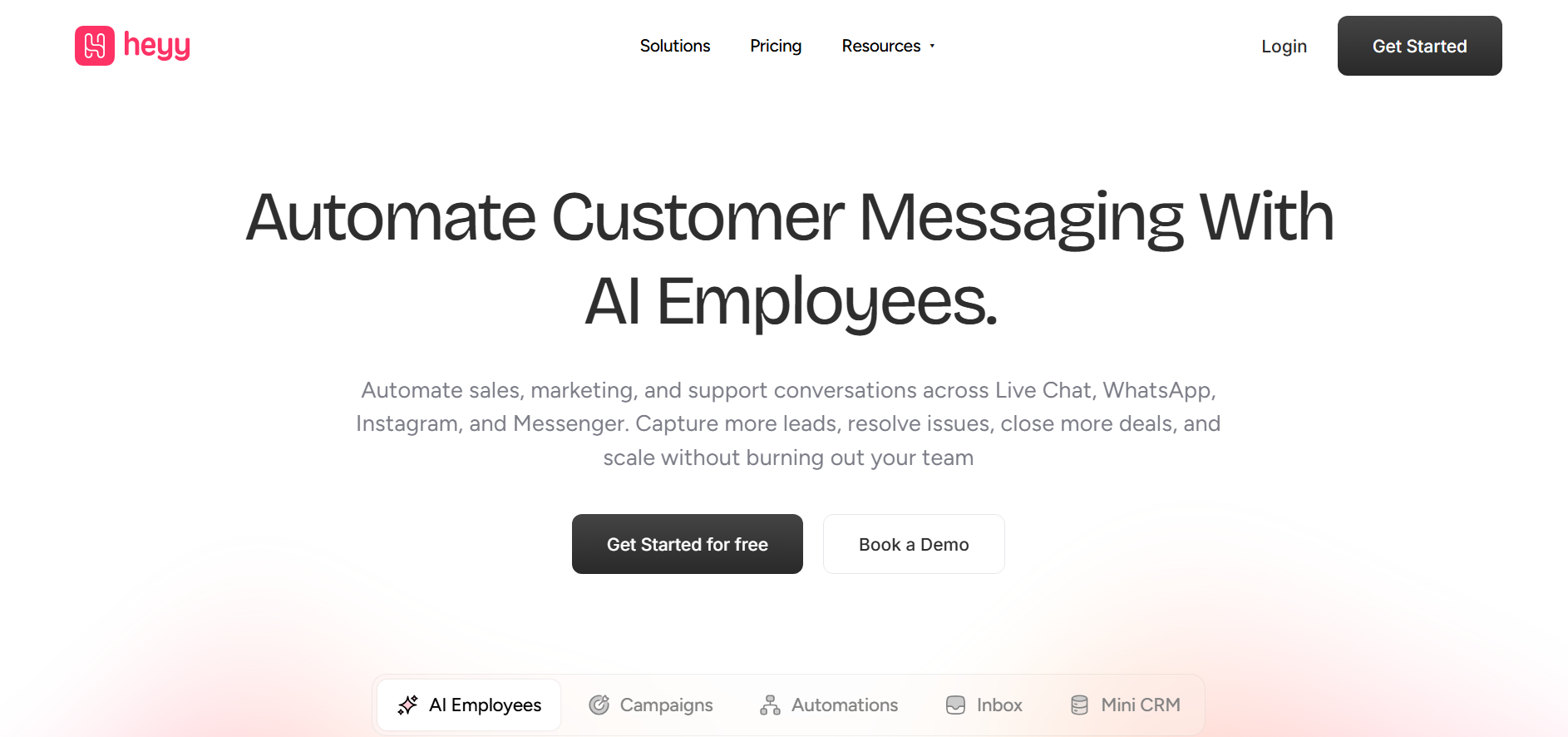
Best for: Consumer-facing businesses that need WhatsApp, Instagram, Facebook Messenger, and website chat managed by AI that handles queries without human intervention, on a flat subscription with no campaign recipient limits.
Wassenger and Heyy serve different models. Wassenger is AI-assisted: the AI drafts, a human sends. Heyy is AI-autonomous: the AI Employee handles the full conversation, escalating only when it genuinely needs a human. For teams handling volume that makes human approval on every AI message impractical, this architecture difference is the reason to switch.
The channel coverage difference is the other primary argument. A customer who messages your Instagram DM about a product availability question and follows up on WhatsApp two days later appears as the same contact with the same conversation history in Heyy. Wassenger has no answer for the Instagram DM. Two separate tools, two separate histories, two separate inboxes.
For eCommerce brands, Heyy's Shopify integration makes order-tracking queries fully automated. The AI checks live order data and responds accurately. No template routing. No human needed for WISMO queries at any hour.
Campaign broadcasts in Heyy are not limited by recipient count at the plan level. The limits that apply are Meta's own WhatsApp template messaging limits, which scale with account quality rather than a platform-imposed cap.
The free plan covers WhatsApp, Instagram, Facebook Messenger, and website chat permanently. Not a trial. Not a time-limited access period.
Wassenger comparison verdict: Wassenger for developer teams that need clean API access, AI-assisted drafting, and WhatsApp-only operations. Heyy for teams that need autonomous AI across WhatsApp and social channels without campaign recipient caps or per-conversation AI billing.
Pricing: Free forever. Hobby $49/month. Pro $149/month. Ultra $499/month.
2. WATI: Best WhatsApp-First Alternative With Higher Campaign Depth
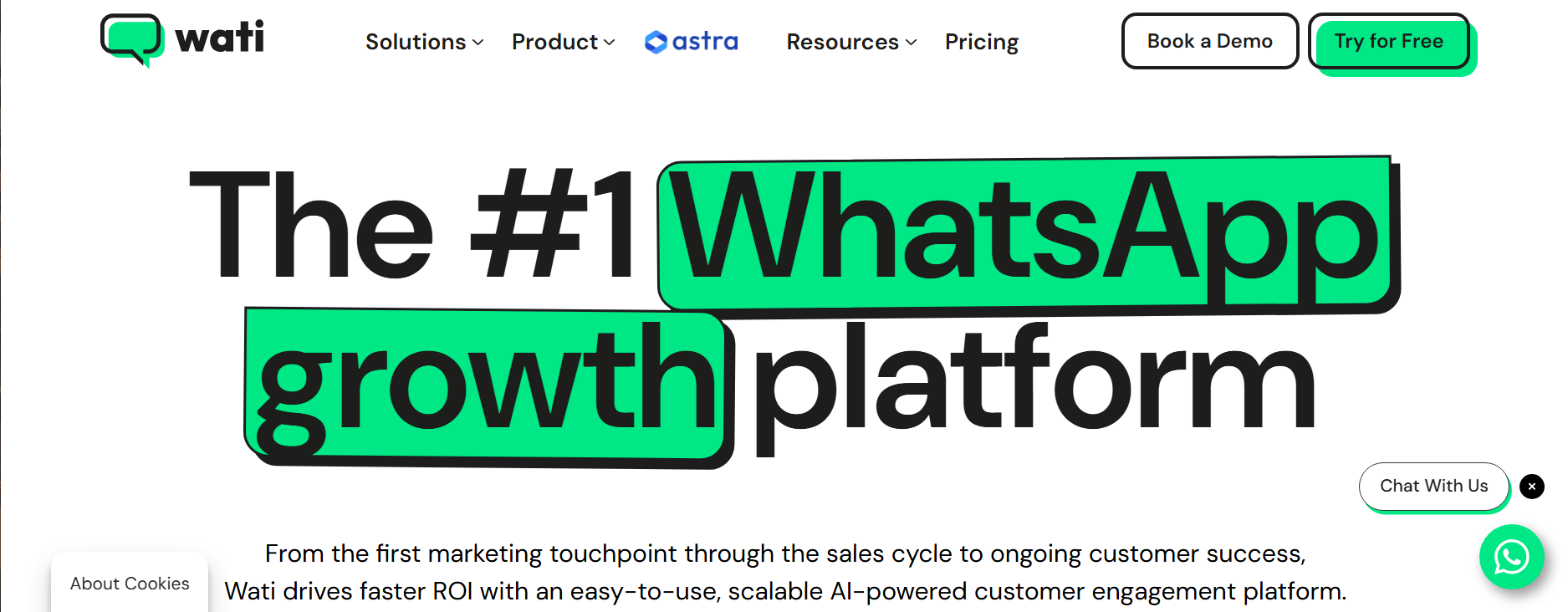
Best for: Teams staying within WhatsApp who need a more established WhatsApp platform with higher template campaign capacity and wider market recognition than Wassenger.
WATI is the most commonly compared alternative to Wassenger because both are WhatsApp-only BSPs at similar price points. The differences matter for specific use cases.
WATI's team inbox and no-code flow builder are more polished for non-technical teams than Wassenger's more developer-oriented interface. Astra AI Agents on higher WATI tiers handle conversations autonomously rather than drafting for human approval. For teams where AI autonomy is the reason they are leaving Wassenger, WATI's AI architecture is a step closer to what they need.
The campaign limits on WATI are also higher than Wassenger's. Pro and Business plans support larger broadcast audiences without manual list splitting.
The honest trade-off: WATI adds approximately 20% markup on Meta's base message rates. Wassenger passes through Meta's rates transparently. For high-volume senders, that markup differential matters. For teams sending under 10,000 messages per month, it is negligible. For a full comparison of what teams gain and lose when switching WhatsApp platforms, the top WATI alternatives guide covers the WhatsApp platform market across multiple options.
Pricing: Growth $49/month. Pro $99/month. Business $249/month.
3. Respond.io: Best Omnichannel CRM With AI Agents
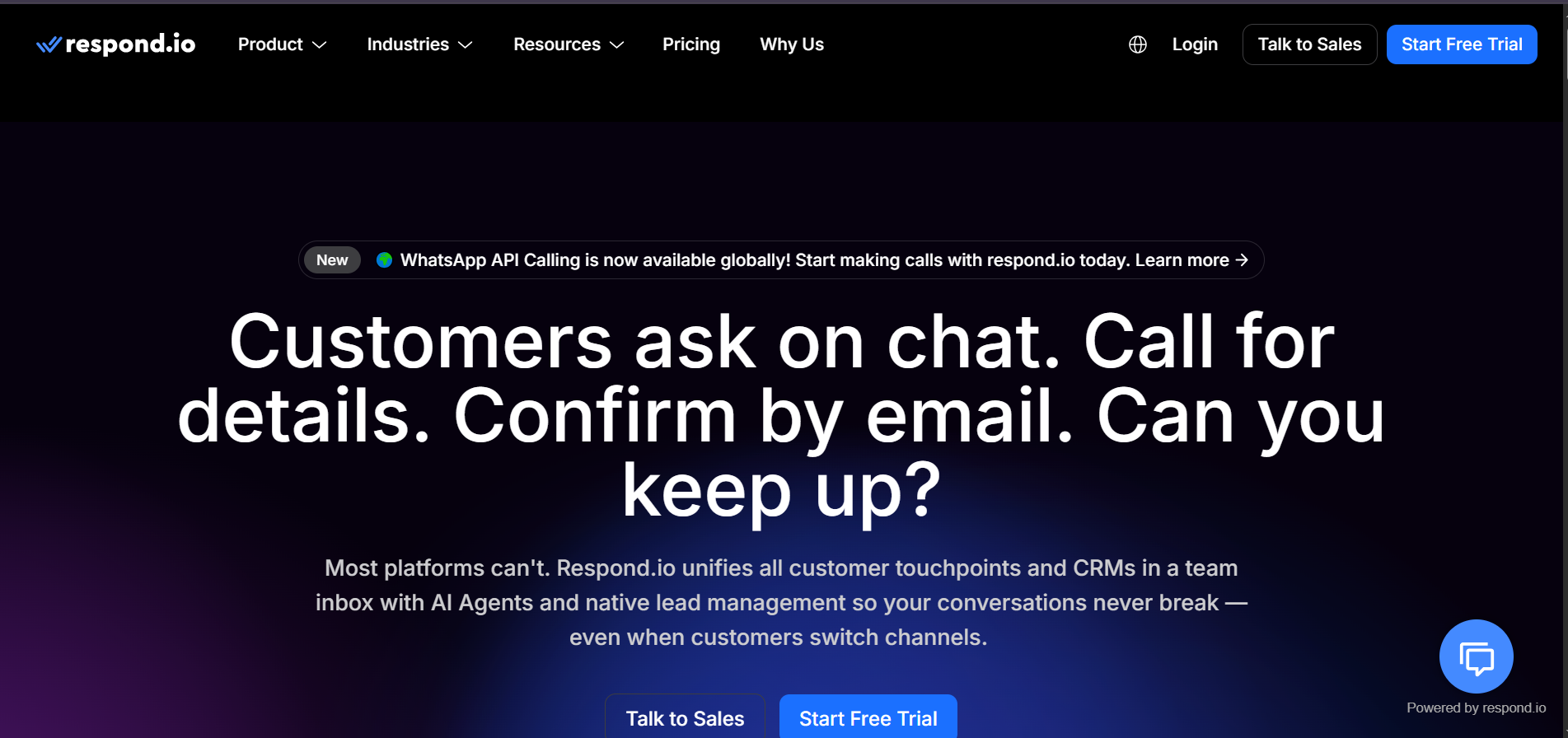
Best for: Teams that have outgrown Wassenger's WhatsApp-only scope and need 12+ channels, sophisticated AI workflow automation, and lead lifecycle management in one platform.
Respond.io is the platform teams move to when the primary exit reason from Wassenger is channel scope. It connects WhatsApp, Instagram, Facebook Messenger, TikTok, Telegram, LINE, email, SMS, and VoIP from one shared inbox. AI Agents handle qualification, support, and routing across all of them.
The AI architecture is different from Wassenger's assist model. Respond.io AI Agents handle multi-turn conversations autonomously, trigger CRM workflows, write to contact records, and escalate with full context when human judgment is needed. For teams whose Wassenger exit reason is "we need AI that actually resolves queries," this is the right architecture.
The trade-off is cost and complexity. Respond.io's Growth plan at $199/month (monthly billing) includes 1,000 Monthly Active Contacts. Teams with growing contact lists face per-contact billing that compounds as the audience grows. Wassenger's transparent flat pricing is structurally simpler.
Pricing: Starter $99/month. Growth $199/month. Advanced $349/month.
4. Trengo: Best Multi-Channel Team Inbox

Best for: Support teams managing WhatsApp alongside email, Instagram, and live chat from one collaborative workspace, where the primary pain is channel fragmentation rather than AI automation depth.
Trengo is the most direct replacement for teams leaving Wassenger for the wrong channel scope reason. It consolidates WhatsApp, Instagram, Facebook Messenger, email, SMS, and live chat in one shared inbox with conversation assignment, status tracking (open, pending, resolved), SLA visibility, internal notes, and saved replies.
Where Trengo adds value over Wassenger: the multi-channel visibility. An agent handling a WhatsApp query and an email complaint from the same customer sees both in one workspace without switching tools. For teams running WhatsApp alongside email support, this consolidation directly reduces the operational cost of fragmented inboxes.
The Flowbot adds no-code automation: FAQ deflection, lead capture, routing logic. It is rule-based rather than AI-native, which is a genuine limitation for teams wanting Respond.io-level AI. But for teams where the primary pain is coordination rather than automation, Trengo's inbox depth is exactly right.
Pricing: From $405/user/month (Boost). Pro from $695/user/month. Enterprise custom.
5. Interakt: Best for Shopify eCommerce WhatsApp

Best for: Shopify and WooCommerce stores that need WhatsApp automation specifically built around eCommerce workflows: abandoned cart recovery, order confirmations, COD-to-prepaid conversion.
Interakt is the most eCommerce-native WhatsApp BSP on this list. The Shopify and WooCommerce integrations are bidirectional and purpose-built. Product catalog, order data, customer records, and payment link generation sync automatically without middleware. Abandoned cart recovery sends messages personalized to the specific products in the cart, not a generic reminder.
For a DTC brand whose primary WhatsApp use case is eCommerce automation, Interakt handles the stack more cleanly than Wassenger. Wassenger provides the API infrastructure and a general inbox. Interakt provides the eCommerce workflows pre-built.
The trade-off: Interakt is WhatsApp-only and optimized primarily for South and Southeast Asian markets. For brands in those markets on Shopify, it is a strong fit. For European or North American brands needing GDPR-optimized infrastructure, verify the data residency options before committing.
Pricing: Starter from $12/month. Growth from $55/month. Advanced from $69/month.
6. Chatwoot: Best Open-Source WhatsApp Shared Inbox Software
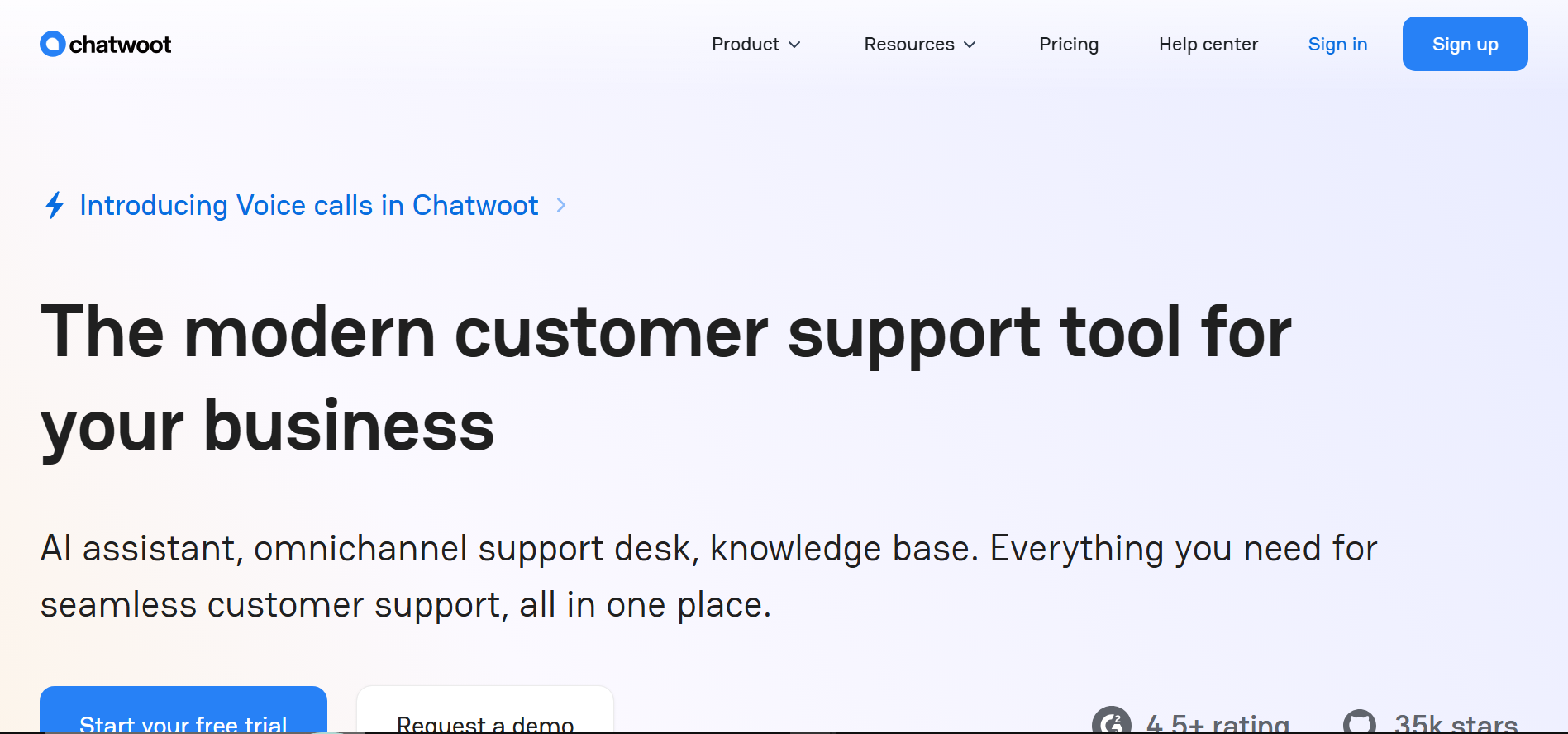
Best for: Developer-led teams that want Wassenger-equivalent WhatsApp shared inbox software with open-source infrastructure, full data sovereignty, and no platform-imposed recipient or campaign limits.
Chatwoot is the alternative that makes the most sense for teams that chose Wassenger because of its developer-friendly API and are now looking for a tool that goes further in that direction. Chatwoot is open-source, MIT-licensed, and self-hostable. WhatsApp, Instagram, Facebook Messenger, email, live chat, Telegram, and Twitter all connect through one shared inbox.
Self-hosted Chatwoot has no per-message limits, no campaign recipient caps, and no monthly plan. The cost is server infrastructure and developer maintenance. For a developer team that built extensively on Wassenger's API and wants similar flexibility without platform constraints, Chatwoot's self-hosted option provides the infrastructure they need.
The AI layer is not native in the same way Wassenger provides it. Teams add AI through third-party integrations via API. That requires developer effort but allows for any AI model the team wants to use, not just the models the platform has chosen to integrate.
For a fuller picture of what the WhatsApp multi-agent chat platform market looks like beyond Wassenger and Chatwoot, the best WhatsApp automation tools guide covers the category across 10 platforms.
Pricing: Hacker, Free (2 agents), $19/agent/month (Startups), $39/agent/month (Business).
7. Freshchat: Best for Freshworks Ecosystem Teams
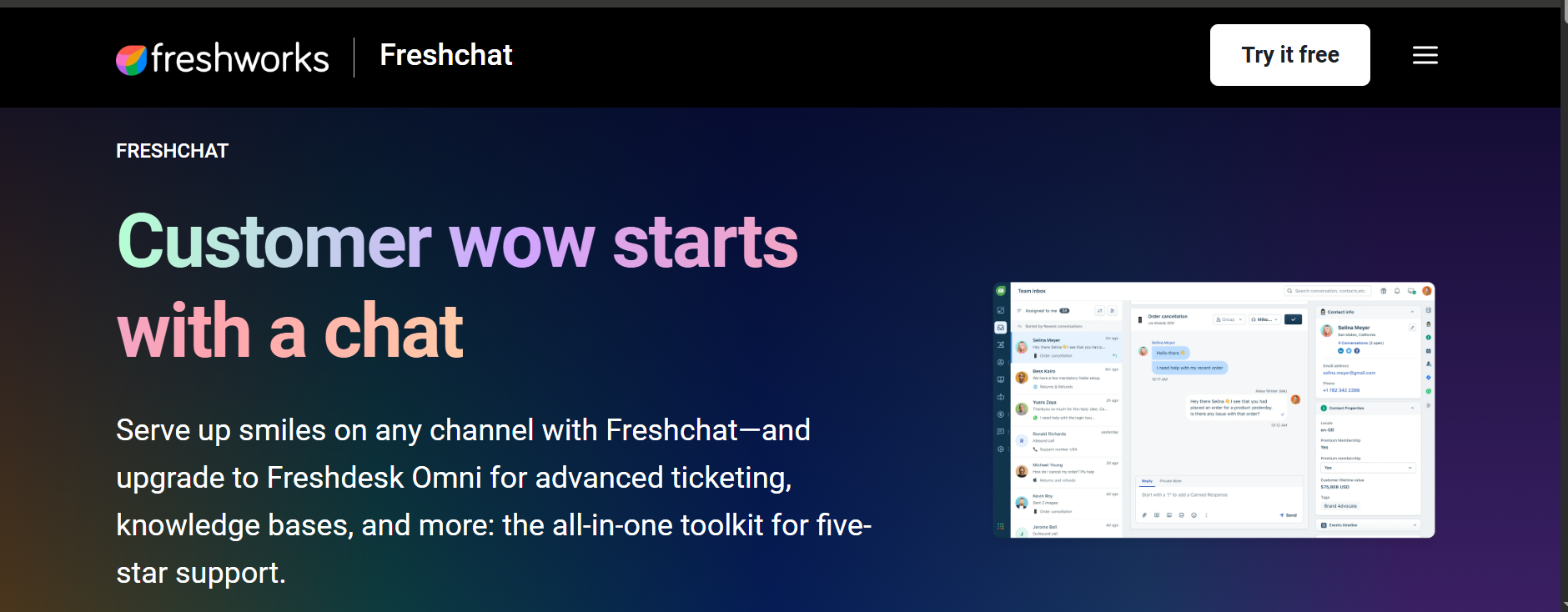
Best for: Teams already using Freshdesk or Freshsales who want multi-agent WhatsApp shared inbox software synchronized with existing CRM records and support tickets without a new vendor.
Freshchat adds WhatsApp, Instagram, Facebook Messenger, email, and website live chat in one inbox that syncs automatically with Freshdesk tickets and Freshsales CRM records. For teams invested in Freshworks, this is the lowest-friction path from Wassenger: one OAuth connection and every WhatsApp conversation appears in the inbox already attached to the right contact record.
The free plan for up to 10 agents removes the cost barrier for smaller teams evaluating the transition. For teams currently paying Wassenger's €39.90/month Professional plan and wanting to stay in a similar price range, Freshchat's free plan with WhatsApp connectivity is meaningfully more capable.
The honest limitation: Freddy AI sessions are an add-on at $49 per 100 sessions. The free plan gives you the multi-channel inbox without AI. Adding AI autonomy adds to the headline price in the same way Lyro adds to Tidio's headline price.
Pricing: Free for 10 agents. Growth $23/agent/month. Pro $59/agent/month.
8. Bird: Best Enterprise BSP for High-Volume Developers
Best for: Enterprise technical teams sending millions of WhatsApp messages monthly who need direct BSP infrastructure, complete API control, and no platform-imposed campaign recipient limits.
Bird appeals to the same developer sensibility that makes Wassenger attractive, at enterprise scale. WhatsApp, email, SMS, push, and voice from one API layer with complete programmatic control. No no-code interface between the developer and the infrastructure. No campaign recipient limits imposed by the platform. No markup on Meta's base message rates.
The economic case at volume: Wassenger caps campaigns at 2,000 recipients on its highest self-serve plan. Bird has no equivalent cap. For a business with 100,000 opted-in WhatsApp contacts running weekly marketing sequences, Wassenger's plan structure requires either a custom contract or a workaround. Bird's infrastructure handles that volume natively.
The constraint is the same as every infrastructure-first tool on this list: Bird requires developer resources to configure and maintain. Teams that found Wassenger too technical will find Bird more technical. Teams that found Wassenger too limited by its recipient caps and want more API control will find Bird correctly positioned.
Pricing: Priced by Volume, not by seat.
How to Choose the Right Wassenger Alternative
The decision maps to the specific Wassenger limitation you hit. Each of the Wassenger competitors below solves a different version of it.
- If campaign recipient limits are the problem: Heyy (no platform-imposed recipient caps), WATI (higher campaign limits on paid plans), or Bird (enterprise volume with no recipient ceiling).
- If WhatsApp-only coverage is the problem: Heyy (WhatsApp + Instagram + Facebook + web in one AI inbox), Respond.io (12+ channels), or Trengo (WhatsApp + email + Instagram + live chat in one team inbox).
- If AI autonomy is the problem: Heyy (AI Employees handle queries without human approval), Respond.io (AI Agents with workflow automation), or WATI (Astra AI Agents on higher tiers).
- If you are on Freshworks: Freshchat. The sync with existing CRM and ticketing records is the decisive advantage.
- If your team is developer-led and wants open-source infrastructure: Chatwoot. Self-hosted, free, MIT-licensed, and API-flexible.
- If you are sending at enterprise volume: Bird. No recipient limits, no markup, direct BSP infrastructure. If none of the eight options above clearly maps to your situation, the best customer communication tools guide covers the broader category with a decision framework.
So there you have it, Wassenger is the platform that makes WhatsApp manageable for a team without requiring enterprise infrastructure or enterprise pricing. The exits happen when the team grows past what WhatsApp alone can handle, when campaigns need to reach more than a few thousand contacts, or when AI that drafts replies is not enough and the team needs AI that resolves them.
For brands where those limits have arrived, Heyy covers WhatsApp, Instagram, Messenger, and website chat with AI that handles routine queries autonomously, no campaign recipient limits imposed by the platform, and a free plan that starts immediately. Start free and run your first cross-channel AI conversation today.
FAQs
1. What is Wassenger and who is it built for?
Wassenger is an official WhatsApp Business API platform with a shared team inbox, visual chatbot builder, AI-assisted reply drafting, bulk campaign tools, and a developer REST API. It is best suited to small-to-medium teams that want WhatsApp automation with transparent pricing and developer flexibility. It is not built for teams that need Instagram or website chat, AI that handles conversations without human approval, or campaign broadcasts beyond 2,000 recipients per send.
2. Is Wassenger actually an official WhatsApp BSP?
Yes. Wassenger runs on the official WhatsApp Business API (WABA). It is not using an unofficial protocol or browser automation. The consequence is that it is compliant with Meta's policies and will not result in account restrictions. Some cheaper tools use unofficial methods. Wassenger does not.
3. Can I keep my WhatsApp number when switching from Wassenger?
Yes. Your WhatsApp Business number is registered with Meta, not with Wassenger. You reconnect the same number to your new BSP through Meta Business Manager. Your approved message templates remain available. Conversation history does not transfer. Most migrations complete within 24 to 72 hours.
4. Which Wassenger alternative is best for small teams on a tight budget?
Heyy's free plan covers WhatsApp, Instagram, Facebook Messenger, and website chat at no cost permanently. Chatwoot's self-hosted version is also free. Freshchat's free plan covers 10 agents with WhatsApp access. All three give you more channel coverage than Wassenger at lower or equivalent cost to Wassenger's entry plan.
5. Does any Wassenger alternative have no campaign recipient limits?
Heyy does not impose platform-level campaign recipient limits. The limits that apply are Meta's own tier-based messaging limits, which scale with your WhatsApp account quality rating rather than a plan cap. Bird (MessageBird) also has no recipient ceiling at the platform level. WATI has higher limits than Wassenger on paid plans but still imposes plan-level caps.
More blog posts to read

Ready to Automate Support
Across Every Channel?
.svg)
.avif)